
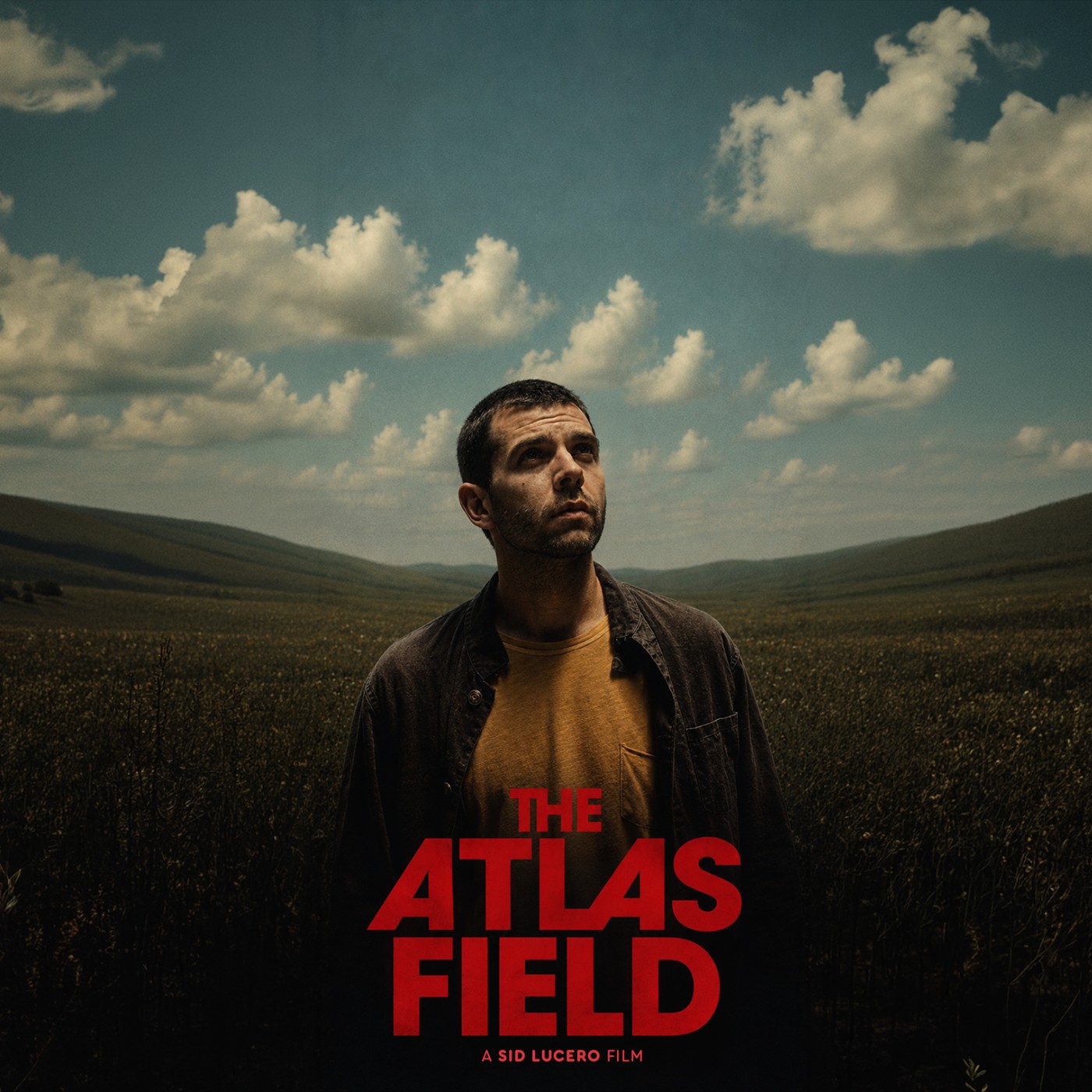
The Atlas Field
Two brothers, a mountain that keeps changing, and a giant snail: Sid Lucero's slow, sensory indie horror rewards patient eyes, even when its central mystery drifts to the sidelines.
Sid Lucero is an Italian independent filmmaker whose work blends psychological horror, surrealism and experimental cinema, with earlier films including Pink for the Masses, The John Perkins Tapes, Sehnsucht and Transcendental. The Atlas Field, his latest, runs a lean 68 minutes and was released on 4 September 2026. It is available worldwide to buy or rent digitally through Lucero’s own website, with cinema screenings planned for Trento, Italy, in January 2027 and a limited-edition DVD to follow.
A Camcorder Cold Open
The film opens in a style that hooks immediately: old-school camcorder footage of a scientist talking to camera as though he is running an experiment, very much in the vein of the Backrooms videos that have done the rounds on YouTube. These opening scenes follow two scientists running environmental experiments out in the woods, and what is actually going on is genuinely hard to pin down, in a good way. That old videotape look leaves you wondering whether the whole thing is about to turn into a full found-footage film. The chats between the two scientists are rougher, though. There is a lot of cursing, which is not a problem in itself, but it tips over the top, and some of the humour does not land. Once the experiment wraps up, the pair see something in the woods and get chased by it, and the film jumps ahead.
Two Brothers, One Mountain
From there we meet Daniel and Henry. Daniel is terminally ill, and he has convinced his brother to accompany him to the summit of a mountain they visited together as children. The surrounding forest is tied to a mysterious research operation run by a private company called Sirevo, and unexplained things are being reported throughout it. As the brothers climb, broken into chapters as they work their way up and down the mountain, they notice the road is longer than it should be and that there are trees that were not there before. There is also another reason they are walking up that mountain, and it is much better discovered in the film itself.
Indie films are a different breed. They are more thought-provoking, and they ask you to watch the screen, listen to the actors and pick up on their emotions a little harder. The Atlas Field definitely has that. As the brothers climb, they grow wary of what is happening around them, and much of the film sits in their conversations about Daniel’s illness and how that will play out down the track. A lovely structural touch is that there are really only two actors in it. That grounds you in the story, because you are not trying to keep track of an expanding cast. It is just two brothers, with everything else arriving through voiceovers, phone conversations and the like.
Watching the Trees Watch Back
The camera work is strong, with good stable shots of nature, and some of the scenery is absolutely gorgeous. The film has a sensory quality, pushing you to take in the colours of the mountain and the sounds around the brothers, and for an indie production some of the visual effects are very good.
Not everything works. Sometimes the camera angles cut off a little too much, and some of the framing feels awkward when your brain needs something to focus on. The camera also lingers long on scenes of nothing but nature. This is clearly the area where much of the Atlas Field experimentation took place, with unusual speakers positioned in the trees, and the brothers seem oddly oblivious to it all. There are moments where trees move and collapse into themselves, and they simply do not see it.
And yet the lingering starts to earn its keep. The further in it goes and the more things change, the more you hold on the images and scan them for anything shifting. With the trees collapsing in on themselves especially, you end up watching the scenery intensely, hunting for the next distortion. Perhaps that is the whole intention behind holding the camera on one scene for so long. The standout image of the film is the giant snail, which is just crazy, and which may well be a dream sequence from one of the brothers, because it has that kind of feel to it.
Towards the end, a much bigger and deeper understanding of the Atlas Field arrives through voiceovers and images, playing like echoes of the past and the future tangled together. It would have been nice to have more of it in the film, and more of it with the brothers, because as it stands it comes across more like a side story than the spine of the mystery.
Rated OCT 2026About the film
- Director
- Sid Lucero
- Runtime
- 68 min
- Where to watch
- Rental on Vimeo, Digital Purchase. Limited DVD Release 2027.
Sid Lucero is an Italian independent filmmaker and screenwriter whose work blends psychological horror, surrealism and experimental cinema. His films explore the darkest aspects of the human mind, examining themes such as obsession, alienation, desire, guilt and identity through evocative imagery and narratives that invite interpretation. Defined by a minimalist and atmospheric style, Lucero's films focus on psychological unease and emotional intensity rather than the conventions of traditional horror, creating intimate and unsettling cinematic experiences. His filmography includes Pink for the Masses, Daddy's Spitting Maidens, The John Perkins Tapes, The Bog Goggles of a Junkie's Fit, Sehnsucht, Transcendental and The Atlas Field.