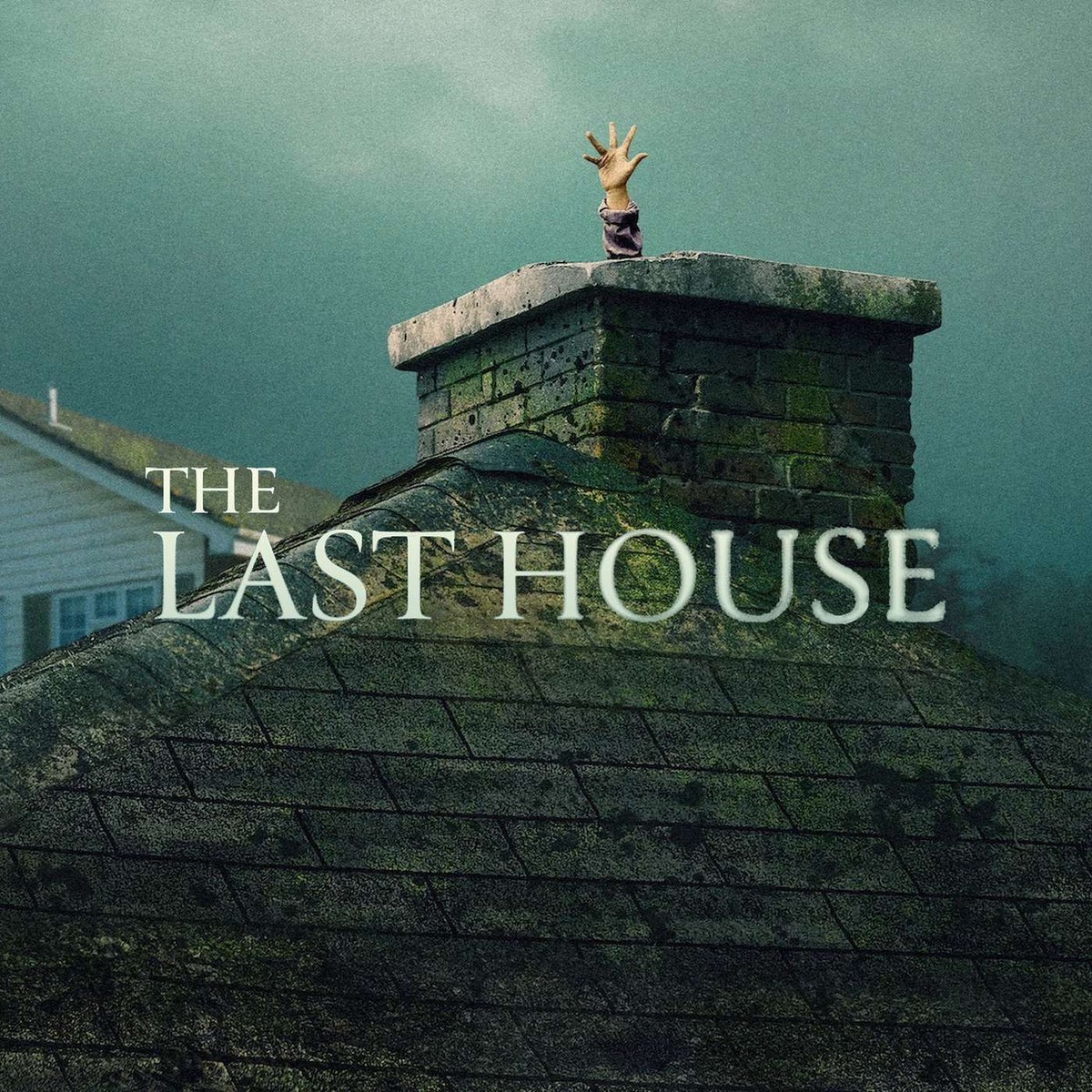
The Last House
Netflix seals a family inside their own home for years in this middling survival thriller, and one dark turn involving the family dog is the thing I couldn't shake after the credits rolled.
 5.7/10 · DIVIDED
 I’m going to be honest and open with you right from the top, because it’s the only fair way to frame this one. Netflix, for me, does not make good movies. They are wildly hit and miss. It feels like out of every 50 films they put out, maybe one or two actually land. They’re much better these days at television shows and documentaries, and even then they frustrate me by cancelling shows after a single season, which honestly puts me off starting new ones in the first place. So when The Last House popped up, I went in with very little hope that it was going to come out looking great. But the concept grabbed me, I enjoyed the trailers, and I was curious to see how it would actually play out. And where it ended up landing for me is right in the middle: some things I really liked, some things that had me checking how much runtime was left. We’ll get into all of it.
Sealed In
First, the setup. The Delgado family, parents Ann and Jason, played by Greta Lee and Wagner Moura, and their two kids Ruth and Graham, wake up during a violent rainstorm to find every door and window of their suburban home sealed completely shut. No explanation. No way out. Just strange silhouettes moving through the downpour outside, and the slow realisation that the same thing has happened to every house on the street. From there the film stretches across a genuinely long ordeal (we’re talking years, not days) as supplies dwindle, the family frays, and mysterious amphibious creatures start stalking the property. Behind the camera you’ve got Louis Leterrier, the guy behind The Transporter, Now You See Me and Fast X, working from a screenplay by Matthew Robinson, who wrote Love and Monsters and Dora and the Lost City of Gold. And a bit of production trivia for you: Wagner Moura actually stepped into the role of Jason after Netflix picked the film up in early 2025, taking over from Kingsley Ben-Adir, who was originally attached. One more piece of context worth flagging before we go any further. Netflix ran an almost identical premise just a year before this with Brick, where a couple wakes up to find their apartment sealed in by black bricks stacked over every door and window. Two “trapped inside your own home” thrillers on the same platform within about 12 months of each other. Make of that what you will. More on Brick later.
Now, credit where it’s due, because the opening stretch of this film properly earns its stakes before it ever leans on the creatures. The family tries everything to get out. They kick at doors. They drill holes through the front door, only for the holes to fill straight back up with water. They try to break through a wall, and the rain itself just keeps sealing them back in. It’s a strong, frustrating, claustrophobic opening, and it does exactly what it needs to do: it makes you believe there’s no way out before it asks you to worry about what’s coming in. And I really liked that the film doesn’t keep the mystery locked to one house either. The whole neighbourhood starts communicating through handwritten signs and boards held up to windows, theorising about the government, about aliens, about whether anywhere is safe, working out street by street how far this thing actually spreads. It’s a clever, low-tech way of building the mystery outward, and it gives the early stretch a real sense of community dread rather than just one family in a box.
There are some lovely smaller touches in there too. With the power situation what it is, the family goes old-school for the kids: a turntable spinning vinyl, a DVD player, and a family movie night watching Air Force One, which got a smile out of me. And there’s a proper Netflix-specific Easter egg tucked in there as well. At one point the dad throws out one of the old red Netflix DVD mailer envelopes, the kind Netflix used to post discs out in back when you rented movies through the mail. Leterrier has confirmed that’s a deliberate nod to Netflix co-chief Ted Sarandos, one of what he’s called “a million Easter eggs” scattered through the film. There’s a nice streak of dark humour running through the early days too: the parents sneaking a smoke, settling in for the movie, and being quietly pleased that at least they don’t have to pay the mortgage this month. Those little human beats are where the film feels most alive, and I wish it had trusted them more often.
The Kid Who Pays Attention
The strongest element of the whole film, for me, is Ruth. She’s played by three people across the runtime, Riley Chung as the younger Ruth, Emma Ho as the older version, with Arden Cho providing the narration that threads the story together, and she’s the character the film is smartest about. Ruth is the one paying attention. She notices the rain falling wrong on the glass. She works out that the creatures leave salt water behind them rather than anything alien. And she’s the one who builds the theory that reframes the entire film: that these things aren’t invaders from somewhere else at all, but dormant sea creatures that have risen to reclaim a world that used to be theirs. That’s a proper narrative turn, and crucially, it’s earned. It doesn’t arrive through a convenient news broadcast or a scientist character explaining things. It comes from a kid who simply watched more closely than everyone else in the house. That’s good writing, and it’s the thread I wish the film had pulled harder on.
The five-year time jump is handled really well visually, too. When we come out the other side of it, the house is in ruins, the street outside has been completely swallowed by vegetation, you can barely make out the other houses anymore, and there are literally bears wandering through what used to be a suburb. The family’s full survivalist turn is where the film gets inventive. They’ve ripped up the floor to grow vegetables from collected seeds in the subsoil underneath the house, and they’ve rigged what I can only describe as chimney fishing, traps run through a cracked chimney cap to catch rainwater and passing wildlife. There’s a fun beat where they actually land a catch, and honestly, that stretch of scrappy, practical problem-solving is the film at its most engaging. And the back half, once Jason starts booby-trapping the house Home Alone-style against a creature that’s found its way to them, picks the whole thing back up after a serious sag. I won’t go too deep into how the final confrontation and the ending play out, because it’s much better discovered on screen, but I will say the climax delivers on scale in a way the middle of the film never does.
Because here’s the problem, and it’s a big one. That middle stretch, roughly from the three-month mark through to the five-year jump, just repeats itself. It’s the same beats of scarcity and isolation going round and round without enough forward motion, and I found myself wanting the film to turn a corner long before it actually did. At just shy of 2 hours, it’s simply too long for what it delivers. This is a story that could have been told in 90 minutes without losing a single thing that matters. The visual effects don’t help either, at least early on. They don’t look like they were worth a lot of money, and for a film built on the threat outside the glass, that matters. And then there’s the ending. Not the family’s ending, the mystery’s ending. Because by the time the credits roll, nothing gets answered. What the creatures actually are, we’re left to assume from Ruth’s theory. Why the world was sealed off the way it was: no real explanation. You get a resolution to the family’s situation, but not to the mystery the film spent 2 hours building, and after all that time invested, that stings. Taken all together, it plays like a typical Netflix movie, competently mass-produced, and destined to disappear into that ever-expanding catalogue of films you scroll past 6 months later and can’t quite remember whether you watched.
Where to Go Next
Let’s talk about where else you can find this cast, because there’s some good stuff here. Wagner Moura is probably still best known as Pablo Escobar in Narcos, funnily enough another Netflix production, but more recently he was in The Secret Agent, the 2025 Brazilian film from director Kleber Mendonça Filho, and that one is the real deal. Moura won Best Actor at Cannes for it, and Filho took Best Director. If you want to see what this actor can do with material that fully deserves him, that’s your next watch. Greta Lee, meanwhile, was previously on Apple TV’s The Morning Show as Stella Bak before her character’s exit, and if you haven’t seen her in Past Lives, that is one of the best films of its decade and an easy recommendation. And if the premise of The Last House is what hooked you rather than the cast, go and find Brick, the Netflix thriller from the year before, directed by Philip Koch and starring Matthias Schweighöfer and Ruby O. Fee. Same core idea, apartment instead of house, bricks instead of rain, and it makes for a fascinating double bill if you want to see two films attack the same nightmare from different angles.
So where does that leave us? The Last House is a solid, okay movie, and I mean that precisely. It’s not something I’d tell you to drop everything and watch tonight, but it’s not a waste of 2 hours either. It sits squarely in the middle. There’s a genuinely engaging setup here, a great character in Ruth, some inventive survival detail, and a handful of human moments that really work, wrapped around a saggy middle and a mystery that never pays off.
But look, that’s just how The Last House landed for me. Entertainment is subjective, and a slow-burn family survival story like this might grip someone else from the first frame to the last in a way it never quite gripped me. What dragged for me might be exactly the kind of patient, simmering tension you love. What works for me may not work for you, and what doesn’t work for me might be your favourite film of the year, and that’s completely okay. That’s the whole point of the conversation.
Listen to this episode
Follow Frame 70 on your favourite podcast app and new episodes find you the moment they drop.