
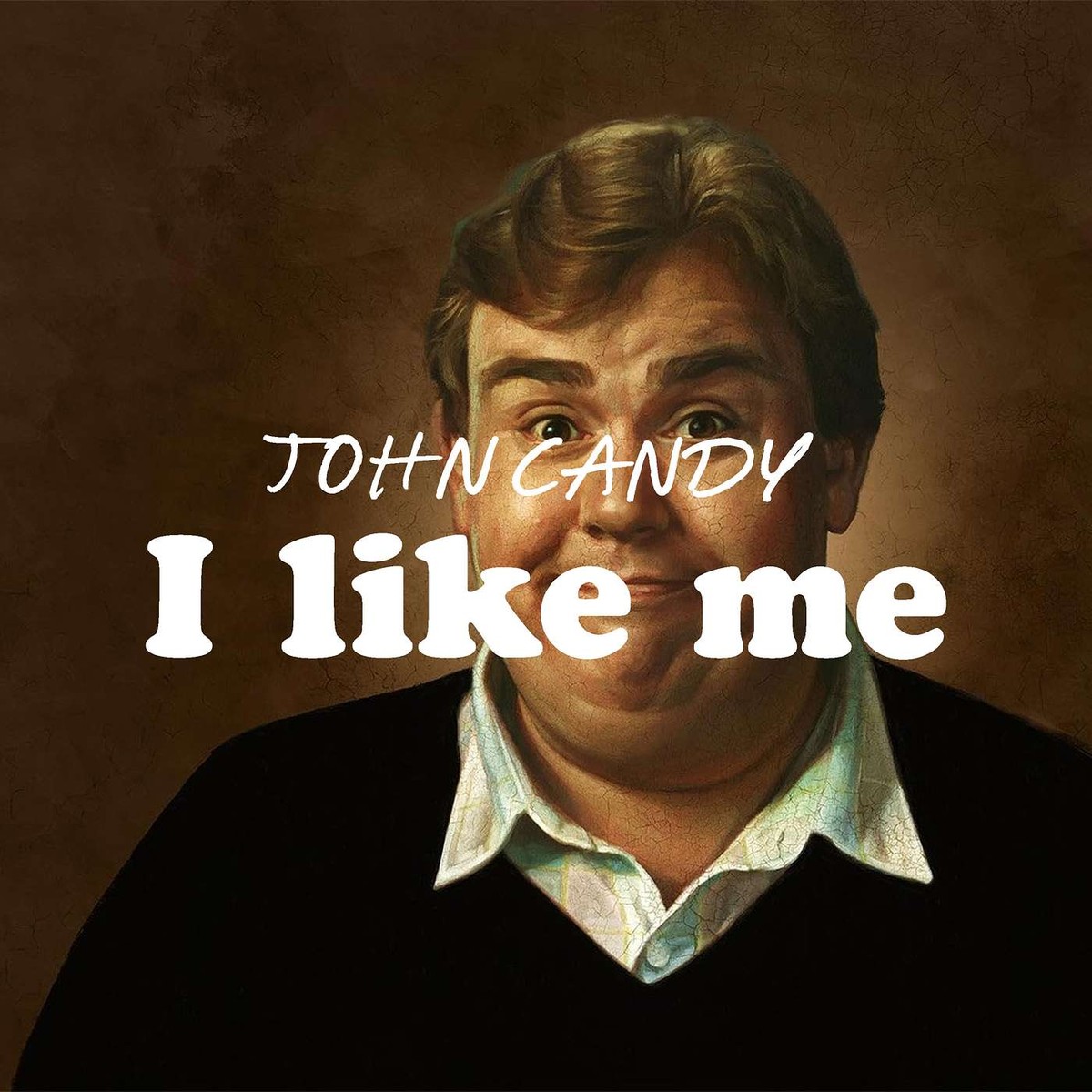
John Candy: I Like Me
Made by people who adored him, Colin Hanks' documentary trades the highlight reel for the man underneath, and gives John Candy the send-off he was owed more than 30 years ago.

The story behind this one matters almost as much as the film itself. John Candy: I Like Me comes from director Colin Hanks and producer Ryan Reynolds, and it’s built around the people who knew John best sharing his story in their own words, through never-before-seen archival footage, imagery and interviews. Think about that pairing for a second. Colin Hanks is the son of Tom Hanks, the same Tom Hanks who starred alongside Candy in Splash back in the ’80s. The director grew up around this man. And Ryan Reynolds is a fellow Canadian who has never hidden his love for Candy; he’s been vocal about his admiration for the late actor for years, even hiding tributes to Candy in all three of the Deadpool movies. This is not a documentary made by a studio ticking a nostalgia box. This is a film made by people who adored the man. It premiered as the opening night film at the 50th Toronto International Film Festival, and it’s streaming globally on Prime Video. Honestly, opening TIFF with a documentary about Toronto’s favourite son is about as fitting a launch as I can imagine. It even debuted at number one on the streaming service, which tells you just how much love is still out there for this guy, more than 30 years after we lost him.
I want to be upfront about where I was coming from with this one. I grew up on John Candy movies. Uncle Buck, The Great Outdoors, Planes, Trains and Automobiles: these films are stitched into my childhood. So my worry going in was simple. Was this going to be a two-hour highlight reel? A parade of talking heads saying he was a nice guy, roll credits? Within about 10 minutes, that worry was gone. This film has no interest in the highlight reel version of John Candy. It wants the man underneath: his insecurities, his devotion to his family, and the very real toll that fame took on him. And because it’s told almost entirely by the people who loved him, it never feels like a biography being recited at you. It feels like sitting in a room while friends and family remember someone they still miss.
From Football Dreams to SCTV
The film starts where John started: Canada. And I’ll admit, some of this early material was new to me. He grew up in a working-class family in Toronto, and his childhood was not an easy one. The film touches on the death of his father when John was young, and you can feel how that loss echoes through everything that comes after. Here’s the detail that got me though. Young John Candy wanted to be a professional football player. That was the dream. And a knee injury took it away from him. It’s one of those sliding doors moments where a genuine heartbreak accidentally hands the world a gift, because with football gone, he found his way into improv and sketch comedy instead. From there the film walks us through his rise in Toronto’s Second City scene in the ’70s, and then onto SCTV, the sketch series that basically minted an entire generation of comedy royalty. The SCTV material is a goldmine. Joe Flaherty, Eugene Levy, Andrea Martin, Catherine O’Hara and Martin Short all share memories of those early days, and what comes through in every single story is the same thing: even in a room full of once-in-a-generation talents, Candy stood out. The executive producer of the show, Andrew Alexander, talks about his uncanny ability to improvise and commit completely to any character, no matter how ridiculous. There’s an added layer of poignancy watching Joe Flaherty here, because we lost Joe himself in 2024. Seeing him light up talking about his old friend hits differently now.
Then comes the leap to the movies, and there’s a lovely story in here about the moment it all changed. Steven Spielberg, yes, Steven Spielberg, calls John Candy to cast him in the 1979 film 1941, and Candy simply couldn’t believe it. He couldn’t believe Spielberg knew who he was. And that reaction tells you everything about the man, because that disbelief never really went away, even as the hits piled up. Stripes. Splash. Summer Rental. Armed and Dangerous. The Great Outdoors. Uncle Buck. The film traces that incredible run through the ’80s, and it gives real weight to his creative partnership with John Hughes, who became one of his closest friends and collaborators. Candy appeared in more Hughes films than almost any other actor, and when you look at that filmography, it makes complete sense. Hughes made comedies with a beating heart, and nobody delivered heart inside a laugh like John Candy. Even the title of this documentary comes from that partnership. I Like Me is pulled from the motel scene in Planes, Trains and Automobiles, the moment where Del Griffith finally stands his ground and declares that he’s comfortable with who he is. It’s arguably the finest dramatic beat Candy ever played, and naming the film after it is a quiet masterstroke, because the whole documentary is really asking whether John ever truly believed those words about himself.
Now, the anecdotes. This film is absolutely loaded with them, and they’re the connective tissue that makes the whole thing sing. My favourite comes from Tom Hanks, talking about Splash. The night before they were due to film the racquetball scene together, Candy ran into Jack Nicholson, and the two of them ended up drinking at a bar all evening. Which means Candy likely showed up to film a physically demanding comedy scene on just a few hours of sleep. Hanks tells it with this mix of disbelief and total affection, because of course that happened. That was John. Story after story paints the same picture. A humble, hardworking actor who never once took his success for granted, who treated crew members the same as co-stars, and who seemed almost embarrassed by how much people loved him. The lineup of people paying tribute here is remarkable too: Bill Murray, Tom Hanks, Steve Martin, Mel Brooks, Martin Short, Eugene Levy, Conan O’Brien and more. That is not a guest list you assemble for just anyone.
The Weight He Carried
But here’s the thing, and this is where the film earns its keep: it does not shy away from the harder material. It digs into his lifelong battle with his weight, and the impossible bind he was in. Hollywood cast him as “the big guy,” built his image around it, and then the press felt entitled to mock him for it. The film includes some deeply uncomfortable interview clips from back in the day, highlighting the inappropriate jokes about his weight that he was expected to sit there and absorb. Watching him smile through those moments is genuinely hard, because you can see the hurt behind the eyes. The film also examines his relentless work schedule, the way he said yes to everything, partly out of that insecurity, partly out of fear it could all disappear, and the toll that pace took on his health and his time with his family. It never turns into a lecture and it never gets exploitative. It just lets the people who loved him tell the truth, and the truth is heavy enough on its own.
The film’s final act is built around the memory of Candy’s last night, and the home movies of him as a dad that follow. I’m not going to pretend I got through that stretch dry-eyed. I didn’t. That final act is the reason this documentary exists, and it lands with real grace.
Where to Go After the Credits
A few recommendations, because this film left me wanting more. If it’s been a while, go back to Planes, Trains and Automobiles. It remains his masterpiece, and after this documentary that motel scene plays like a confession. Uncle Buck is the comfort-food option, and Cool Runnings is a lovely reminder of how warm his later work could be. If you want to see the range he was only beginning to show, seek out Only the Lonely, or his small but surprisingly effective dramatic turn in Oliver Stone’s JFK. For the SCTV family, the through-line to today is a joy. Eugene Levy and Catherine O’Hara reunited decades later on Schitt’s Creek, which is essential viewing if you’ve somehow missed it, and Martin Short is currently delightful in Only Murders in the Building. If you’re in the mood for more documentaries in this vein, Still: A Michael J. Fox Movie is a beautiful companion piece, another beloved Canadian, another story told with honesty and heart, and Robin Williams: Come Inside My Mind covers similar emotional territory about a comedy giant carrying more than he ever let on. Colin Hanks, by the way, quietly proves himself a real documentary filmmaker here. You may know him as an actor from Dexter and Fargo, but his direction in this is patient and full of empathy, and I’d happily watch whatever he points a camera at next.
But look, that’s just how this one landed for me. I came to it with a childhood full of his films, so it was always going to hit me square in the chest. Entertainment is subjective, documentaries included, and what wrecks me might leave you completely unmoved. That’s completely okay. But for my money, John Candy: I Like Me is exactly the send-off this man always deserved, and I’m so glad it finally exists.
Rated OCT 2026LISTEN TO THIS EPISODE
Follow Frame 70 on your favourite podcast app and new episodes find you the moment they drop.