The Notebook
Watching this felt almost too near the bone, a glimpse of a future I might one day be living myself. And yet underneath all that sadness, The Notebook gave me something unexpected: comfort.
 8.3/10 · GREAT
 Before we get into how this one hit me, and believe me, it hit me, a little bit of background. The Notebook is the 2004 romantic drama directed by Nick Cassavetes, starring Ryan Gosling, Rachel McAdams, James Garner and Gena Rowlands. It’s based on the Nicholas Sparks novel of the same name, which was actually his debut, published back in the mid-’90s. Sparks would go on to become a one-man romance factory, with adaptations like A Walk to Remember, Message in a Bottle and Dear John all following, but this is the one that towers over the rest of them. And there’s a lovely piece of trivia baked right into the casting. The director, Nick Cassavetes, is the son of the legendary filmmaker John Cassavetes and the equally legendary actress Gena Rowlands. So when Nick cast Gena Rowlands as the older Allie, he was directing his own mother in one of the most emotionally demanding roles of her later career. Knowing that adds a whole extra layer of warmth to what you see on screen.
A Story Told Every Day
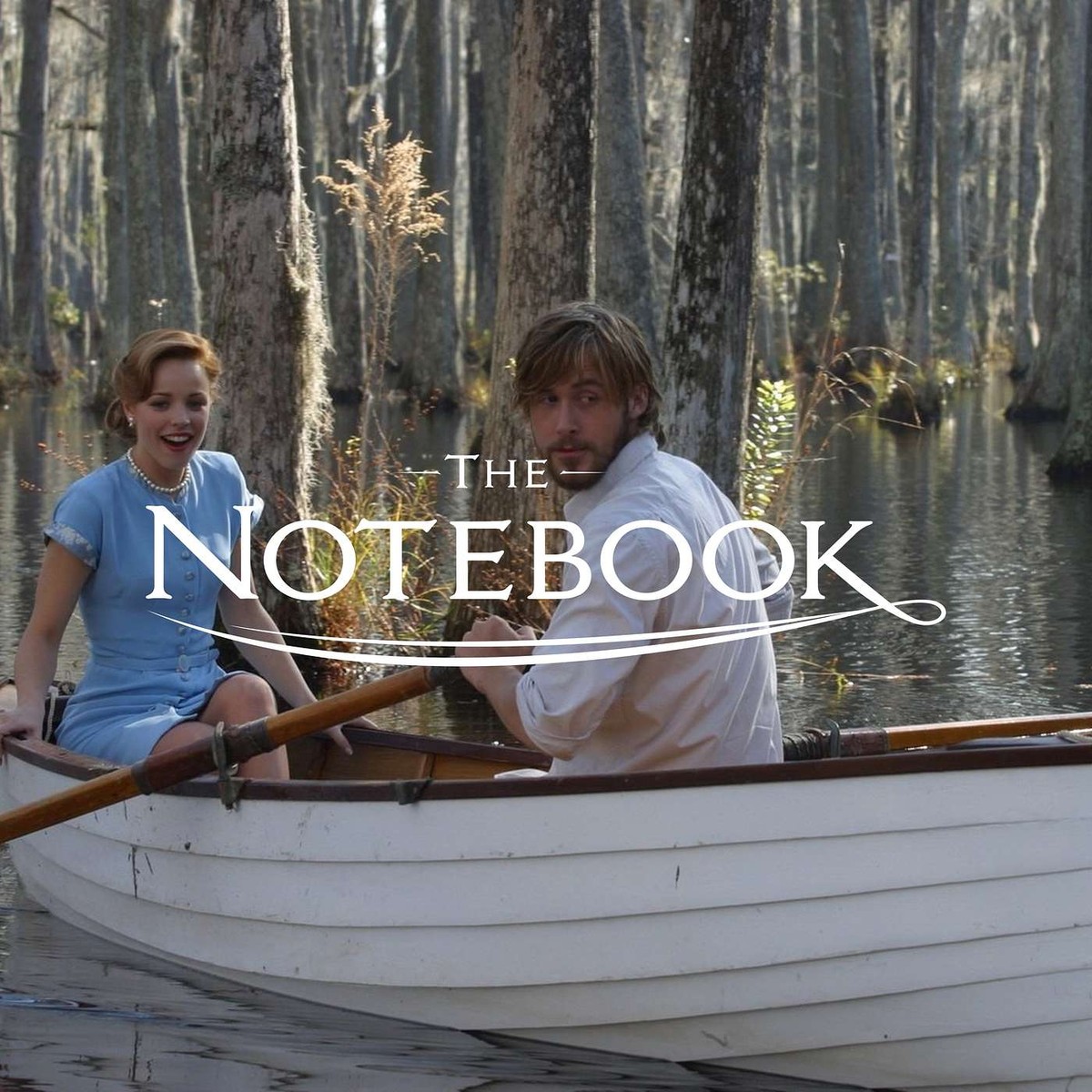
The film opens with Gena Rowlands as Allie, looking out the window of a nursing home, and she looks incredibly sad. Then James Garner walks into the room as a man called Duke, ready to continue a story he’s been sharing with her day after day. He opens up a notebook and begins telling her a love story about a young man called Noah and a beautiful young woman called Allie, set in South Carolina in the 1940s. And we quickly come to realise something heartbreaking: Allie has Alzheimer’s, and she doesn’t remember any of the story Duke has told her before. Every day, he starts again.
From there we drop into the past, where Ryan Gosling and Rachel McAdams play the young Noah and Allie, and honestly, the film does something really clever with its structure. We keep cutting back to the nursing home, where Duke and Allie have these little conversations about the story. She works out that it’s a love story, she decides she likes it, and she asks him to carry on. Then we slide back into the ’40s again. It sounds simple, but that back and forth is the engine of the whole movie, and it pays off in ways I’ll get to shortly.
What I loved most about the young Noah and Allie scenes is how beautifully they capture the innocence of youth. That first summer romance where everything feels enormous and nothing else in the world matters. Gosling and McAdams are electric together, which is remarkable when you consider the famous behind-the-scenes story: the two of them reportedly did not get along at all during filming, and then went on to date in real life afterwards. Whatever was happening off camera, on camera it’s pure chemistry. And it’s worth remembering where these two were in their careers at the time. This film essentially launched them both. McAdams had Mean Girls out the very same year, and would go on to Wedding Crashers, About Time and an Oscar-nominated turn in Spotlight. Gosling took a very different path, through Half Nelson, Blue Valentine, Drive and La La Land, becoming one of the most interesting leading men of his generation. But it all traces back to this rain-soaked romance.
Class, Letters and the Choice
Now, the film isn’t just about young love. It’s also quietly a film about class. The scene where Noah goes to have a meal with Allie’s family really brings the American class system of the 1940s to the fore. Noah works at the lumber mill, and Allie’s family look down on him for it. Her mother in particular works very hard to drive a wedge between the two of them, because in her eyes, Noah is simply beneath their status. And eventually, she wins. The family packs up and takes Allie back to New York. Allie races to the lumberyard to find Noah, but he’s out on a delivery, and by the time he gets back and tears off to the house to find her… they’ve already gone. That sequence of near misses is quietly devastating.
So what does Noah do? He writes to her. Every single day, for about a year. 365 letters. And of course, Allie’s mother intercepts every one of them, so Allie never knows. She believes he’s moved on. He believes she doesn’t care. It’s such a simple storytelling device, but it works because it makes nobody the villain of the romance itself. It’s circumstance, and one very determined mother, keeping them apart. Then the war arrives. Noah and his best mate Finn sign up to fight, and Noah finds himself first in the desert and then in Europe. Meanwhile Allie becomes a nurse caring for injured soldiers, and she falls for one of them: Lon, a charming, wealthy young man who eventually proposes. And here’s the thing the film does well. Lon isn’t a bad guy. He’s decent, he’s kind, he clearly loves her. It would have been so easy to make him a cad, and the film resists it, which makes Allie’s eventual choice mean something.
When Noah comes home from the war, he discovers his father has sold the family home to help him buy the old plantation house, the one Noah always dreamed of restoring for himself and Allie. So he pours himself into it, room by room, exactly the way they’d once imagined it together. And then comes one of my favourite beats in the whole film. On the very day Allie is trying on her wedding dress, she spots a photograph in the newspaper: Noah, standing in front of the finished house. The house he promised her. She goes back to Seabrook to see him, telling herself it’s just to get closure, and instead she starts to realise she never stopped loving him. I won’t walk through every beat of what happens next, because it’s much better discovered on screen, but it forces Allie into the choice at the heart of the whole story.
Garner, Rowlands and Something Personal
And then the film pulls its two timelines together, and this is where it goes from a very good romance to something I’d call special. Back in the nursing home, we come to understand that Duke and Allie are the older Noah and Allie, and that’s when you see just how tough things really are for Noah. Their grown children visit, and Allie doesn’t recognise any of them. The children beg their father to come home with them, and his answer just about broke me. He tells them he already is home. That Allie is his home. James Garner delivers that moment with such quiet, unshakeable devotion. No big speech, no tears, just a man stating a simple fact about his life. Garner was always one of those actors who made everything look effortless. Anyone who grew up watching The Rockford Files or Maverick knows that easy charm, and here he channels all of it into something tender and steadfast. And Gena Rowlands matches him beat for beat. If you’ve never explored her earlier work with John Cassavetes, films like A Woman Under the Influence, do yourself a favour. She’s one of the great screen actresses, and this film is a beautiful late chapter in that career.
There’s also a lovely reveal tucked in near the end. The story Duke has been sharing all this time was actually written by Allie herself, back when she still could, so that it could be told back to her when she no longer remembered. The notebook of the title isn’t his. It’s hers. It’s her voice reaching forward through time to find herself again.
Now I want to share something personal, because it shaped every second of my viewing. I’ve been diagnosed with early onset Alzheimer’s. So watching this film, I wasn’t just watching a romance. I was watching a possible future. Knowing that one day I could be experiencing some of the same things myself made this an extremely sad and extremely tough watch. There were moments where it felt almost too near the bone. But I’m glad I watched it, because underneath all that sadness, this is a film about devotion. It says that even when memory fades, love doesn’t have to. That the people who love us can be our home when everything else slips away. And I found real comfort in that, alongside the tears. The final stretch of the film, where Noah and Allie end up together, drifting into their final forever sleep side by side, is incredibly moving, and it’s earned every drop of that emotion.
If this film works for you and you want more, I’d point you towards About Time with Rachel McAdams, which handles love and loss with a similar warmth, or Still Alice with Julianne Moore, which looks at Alzheimer’s head-on with tremendous compassion. And if you want to see where the Gosling of it all went next, Blue Valentine is almost the shadow version of this film: a romance told across two timelines, but heading somewhere much darker.
Listen to this episode
Follow Frame 70 on your favourite podcast app and new episodes find you the moment they drop.