The Invite
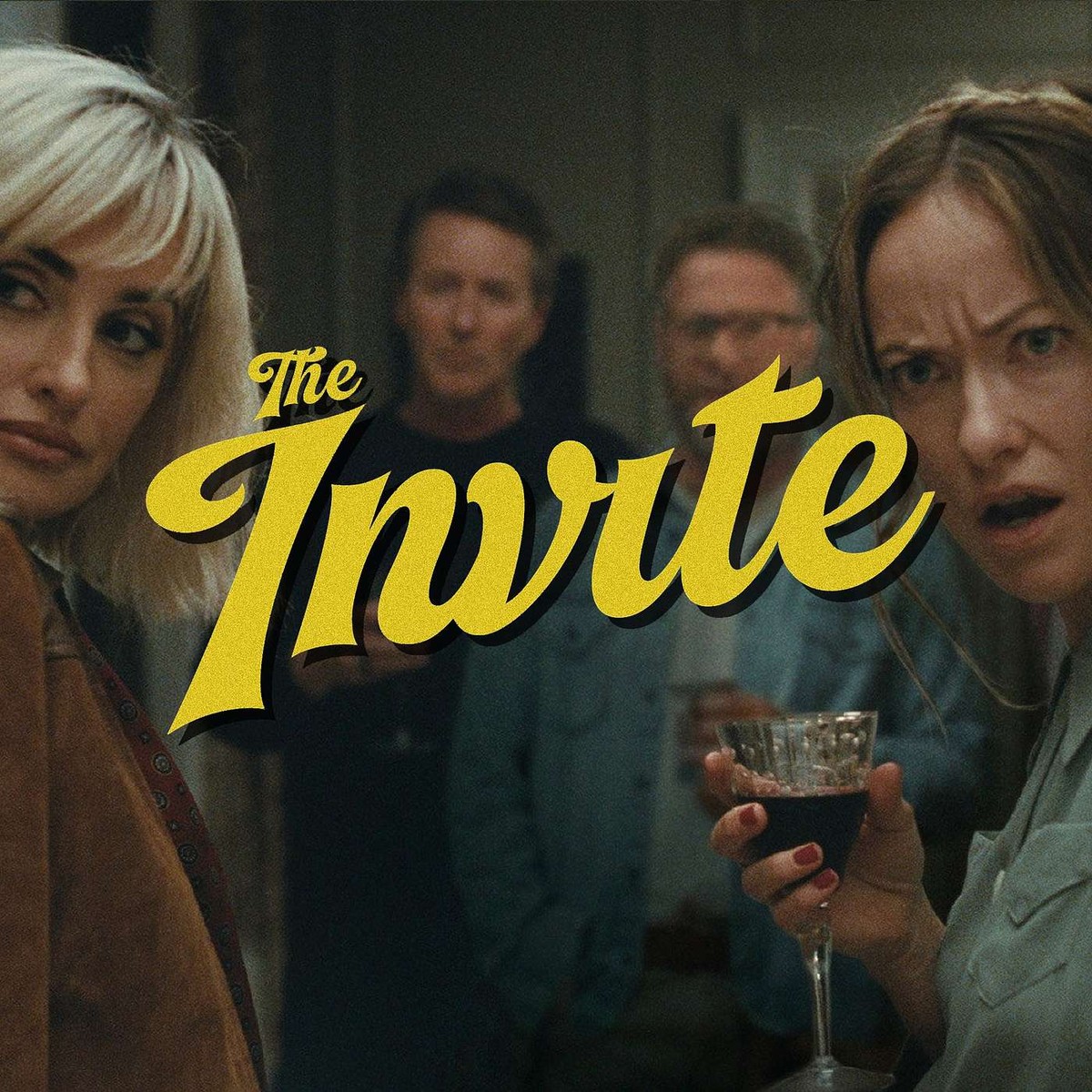
Two neighbours arrive with an invitation nobody saw coming, and Olivia Wilde turns one apartment, four actors and a single dinner party into the most enjoyably uncomfortable A24 night of the year.
 7.7/10 · RECOMMENDED
 So a little context before we dig in. The Invite is Olivia Wilde’s third film as director, coming after Booksmart and Don’t Worry Darling, and it’s the first time she’s directed herself as a lead performer alongside her cast, which is a big swing and a decent stepping-up point for her as a filmmaker. It’s an English-language remake of Cesc Gay’s 2020 Spanish film The People Upstairs, which was itself based on Gay’s own stage play, and the screenplay here comes from Will McCormack and Rashida Jones. It’s an A24 picture, it had its theatrical run, and it’s now streaming, which is exactly how I caught it. And I’ll be honest with you about where my head was going in. I’ve seen quite a few A24 movies this year and they have been very, very good, so this one arrived with that reputation already doing some of the work for it. My one hesitation, and long-time listeners will know this about me, was Seth Rogen’s laugh. I can only take that laugh in small doses, so fingers crossed were firmly deployed before pressing play.
One apartment, four actors, no filler
The film opens with a quote from Oscar Wilde, one should always be in love, and that is the reason one should never marry, which, given everything that follows, is doing a lot of heavy lifting. Then we get our couple playing the piano together, followed by a solo shot of Joe sitting alone in an auditorium, looking very somber and very sorry for himself. And I really liked this opening. It’s composed of these little shots of what’s going on in their day-to-day, Joe leaving work and heading home, Angela out shopping, getting the house ready, cooking, and they’re clearly building toward something. Nice little transitional pieces that tell a story and hand you a bit of backstory before the movie proper even starts, cutting out a lot of the waste that setups like this can carry. The premise itself is beautifully simple. Angela is cooking and getting ready for the upstairs neighbours coming over for dinner. Joe has completely forgotten about it. Their daughter Maggie is away on a sleepover, so it’s just the four adults for the night. Angela seems super excited to host. Joe thinks the male neighbour is an absolute weirdo, and he’d rather be doing literally anything else. And that’s it. That’s the movie. One spacious San Francisco apartment, four actors, and away we go. No CGI, no huge landscapes, no set pieces, just a centralised location and a whole lot of character development and back-and-forth interaction. And honestly, that’s my kind of film.
Now, what worked, and the answer is most of it. Joe, right from the start, is wonderfully neurotic. He doesn’t like the neighbours because all they seem to do is make loud sex noises through the wall every single night, and he desperately wants to say something about it. Angela doesn’t want him to say anything, doesn’t really want them coming over at all by this point, and would happily take a rain check on the whole evening. And as the two of them go back and forth before the guests arrive, the conversation gets heated, and more heated, and more heated, and there’s this brilliant thing happening underneath it where the background violin plays with the motion of the talking, getting heavier and heavier as the tension builds. The score is by Dev Hynes, and there’s a lovely little detail here: the cue under that scene shares its title, Contentious Environment, with one of Joe’s own lines. He says they all love a contentious environment, and the music is sitting right there agreeing with him. That made me smile.
I’ve always been impressed by movies like this that pull off extremely long takes, where you don’t physically see the camera break for what feels like 10 minutes, and the characters are constantly moving and interacting and talking over each other. It’s just cool to see how much the actors have soaked the material in to pull scenes like that off. Because at the end of the day, that is what this movie is, a whole bunch of characters talking in a room, and the filmmaking has to trust the performances completely. It reminded me a little of something like Carnage, the Roman Polanski film with Jodie Foster and Christoph Waltz. That same pressure-cooker feeling of two couples trapped in one apartment being politely horrible to each other until the politeness runs out. If you enjoy this one, that’s a nice companion piece to seek out afterwards.
The dinner falls apart, gloriously
Once Hawk and Piña actually arrive, the first stretch is all awkward small talk about renovations before the alcohol comes out, and that stiff, doesn’t-quite-know-what-to-talk-about energy is absolutely spot on. Anyone who’s ever hosted a dinner for people they barely know will feel it in their bones. And then it properly starts falling apart. Angela has done all this food, only to realise Piña is a complete vegan and can’t eat any of it. Joe is having a quiet mini argument with Angela about when this dinner was actually planned, because it turns out it was arranged that very morning, not weeks ago like she’d told him. The history starts coming out too. Joe the former indie musician now teaching at a small conservatory, Hawk the firefighter, Piña the psychologist and sexologist. And then, completely unexpected, Seth Rogen smoking a joint in a movie. Never thought I’d see that in a million years. It loosens everyone up, and it loosens the film up too.
From there, the dominoes just keep falling, and every single one is funnier and more uncomfortable than the last. There’s a great beat involving the peephole, where Joe gets caught out for having knocked on the neighbours’ door to tell them to keep it down, and it explodes into a screaming match, with Angela crouched down, hands over her face, absolutely mortified. That’s when the truth comes out about the noise. It isn’t just Hawk and Piña up there. They’re swingers, hosting parties in their apartment, and the whole dinner tilts on its axis. What I loved is how Joe and Angela go from shocked to overly enthusiastic almost immediately, both of them suddenly very keen to probe how it started, when it started, how you get invited, helped along by another smoke and a fair bit more drinking. And then it tips even further. Hawk lets it slip that Angela likes to walk around the apartment naked, and Joe didn’t know. He’s shocked and a bit hurt about it, which is somehow both sad and hilarious. Angela crouching and trying to hide because she knows exactly what he’s talking about, while Joe gets up to check the window sightlines for himself. The intense violin comes roaring back for that one. It’s an awkward watch in the best possible way. I honestly don’t think I’ve seen a movie where a couple are this uncomfortable in their own home.
Eventually the real reason for the visit lands. Hawk and Piña came downstairs hoping to invite Joe and Angela to join them. But Piña, being an actual sexologist, has watched this couple bicker all evening and isn’t sure it’s a good idea, so instead the two pairs split off to try things with each other’s partner. And it plays out exactly as hilariously and awkwardly as it should. Angela too nervous to initiate anything with Hawk, and Joe hurting his back while dancing with Piña, which sparks yet another argument and leads into the running tease about Hawk’s real name being Howard. The rhythm of the comedy in this stretch is lovely. Every time the film threatens to get too heavy, someone does something ridiculous, and every time it threatens to get too silly, something true slips out.
Where the film earns its keep
And that brings me to the back half, which is where the film earns its keep. There’s a really sweet stretch about how Angela met Joe, a terrible first date that she walked out of, before running 11 blocks back just to catch him play one last song that evening. And then it turns. Angela tells Joe he’s decided to be miserable, and he pushes back that he isn’t miserable, he’s humiliated. He’s a musician whose career went nowhere, teaching at a bad school, raising his family in his parents’ apartment. It’s the strongest turn in the whole movie, and Rogen plays it beautifully. No laugh in sight, by the way, for anyone who shared my going-in fears. Rogen has done this before, this quietly wounded dramatic register, and his turn in Steve Jobs is a good reference point, but there’s something about seeing it inside a comedy framework that makes it hit harder. And Piña sitting there essentially counselling the two of them through it, free counselling, basically, given her actual day job, lands really well, right up to her suggestion that maybe this relationship has run its course. And the devastating thing is that both of them quietly agree with her.
Once Hawk and Piña have gone home, Joe heads to his office, the room with the piano he never touches, the piano he didn’t even like Hawk touching earlier in the night. And I had a feeling we were heading toward him sitting down at it. He does. Angela hears it from the other room, her ears pick up, and she comes through and watches him through the glass before sitting down next to him and playing along. He plays it heavier and louder, and she just sits there, listens, and watches. And then she rests her head on his shoulder. And that’s how the film ends. No answers, no tidy bow, just the two of them at that piano. It’s a lovely, quiet final piece, and it’s the image that stayed with me long after the credits.
So where do they land? We honestly don’t know if they break up or stay together. The film leaves it for you to decide. But I’m an optimist and a true romantic, and in my head, they stay together. I think that whole chaotic evening might have shaken them up exactly as much as they needed. Rattled their heads around, reminded them what they had, how much they loved and missed each other, and how stale things had been allowed to get. Maybe everything that happened that night was precisely what the doctor ordered. But who knows, and I love that the film respects you enough not to answer it for you. One last touch worth mentioning: the film ends with a tribute to Diane Keaton, who passed away in October 2025. It’s a small, classy note to go out on, and given how much of Keaton’s finest work happened in exactly this space, sharp, talky, bittersweet relationship comedy, it feels like exactly the right film to carry it. And if this one leaves you wanting more from Olivia Wilde behind the camera, Booksmart remains one of the most purely enjoyable comedies of its decade, and the original Spanish film, The People Upstairs, is well worth tracking down for comparison.
That’s just how The Invite landed for me. Entertainment is subjective, and a film built almost entirely on awkward dinner-table conversation is going to play very differently depending on your tolerance for secondhand embarrassment. What worked for me might not work for you at all, and that’s completely okay. But for my money, this is one of the most enjoyable nights in that A24 has offered up this year, and I’d take a seat at that dinner table again tomorrow.
Listen to this episode
Follow Frame 70 on your favourite podcast app and new episodes find you the moment they drop.