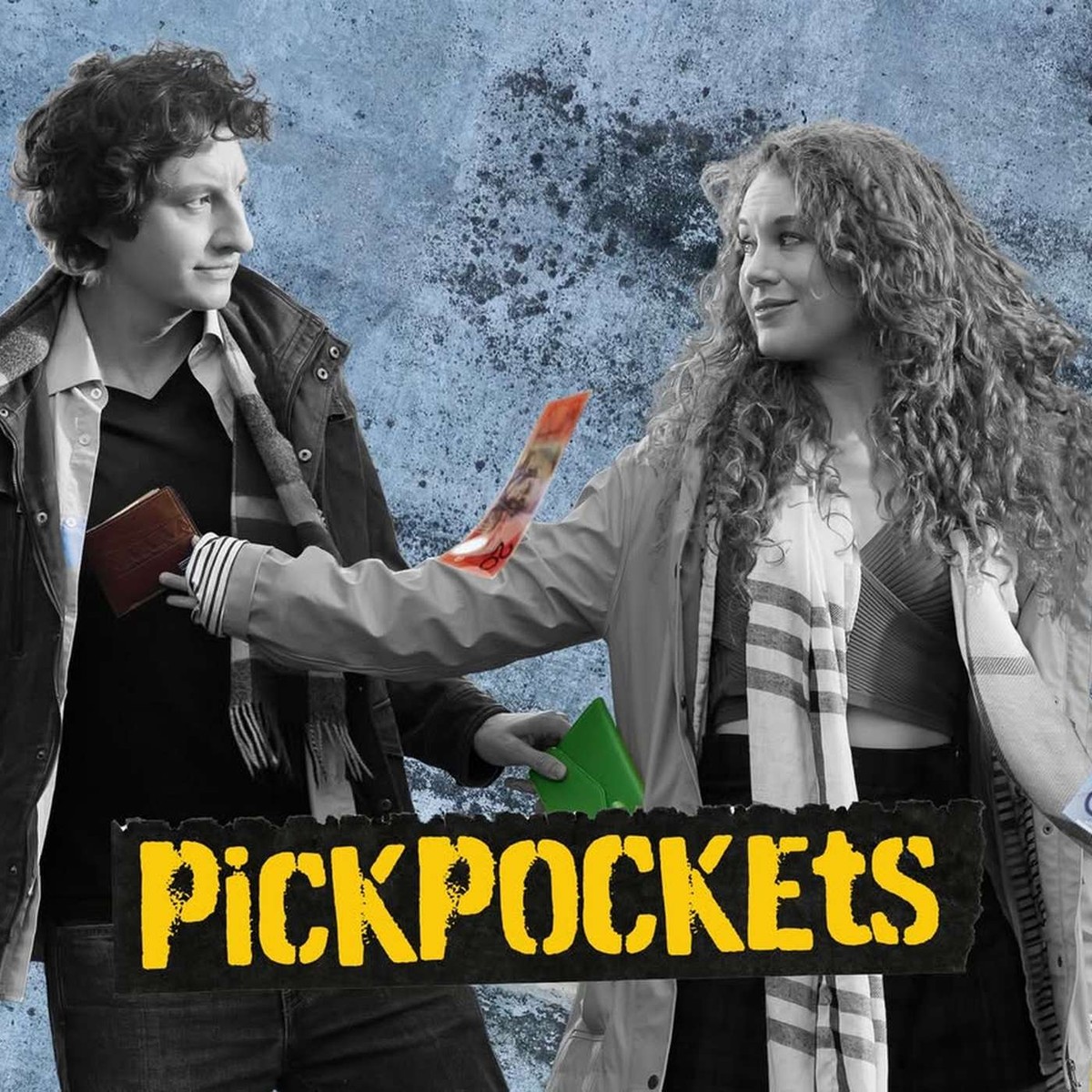
Pickpockets
Two rival Sydney pickpockets can read a stranger in seconds, but reading each other is another story in this stylish, screwball-flavoured Australian crime caper.

It’s always a good day when I get to talk about Australian cinema, especially Australian cinema that takes a few creative risks, and I was lucky enough to catch Pickpockets ahead of its release. Directed by D.C. Fairhurst and starring Fairhurst himself alongside Lucy Green, Tim Minchin and Zoe Terakes, this 2026 independent film has a personality all its own, blending crime, romantic comedy and screwball humour into a story about two rival thieves whose feud gets a lot more complicated when an opportunity comes along that neither of them can afford to ignore.
There’s some background worth knowing, because it shaped how I watched this. Pickpockets started life as a short film called This Town Ain’t Big Enough for the Both of Us, which won Best Editing in an Australian Short at Flickerfest back in 2021. Fairhurst directs the feature version, and he wrote it with Lucy Green. The two of them also star, returning to the same characters they played in the short, and they produced the whole thing through their company Damaged Goods Productions, which is handling the release as well. That is a serious amount of creative involvement from two people. Fairhurst directs, writes, edits and stars. Green writes, produces and stars. Zoe Terakes, Darren Gilshenan and Tim Minchin round out the supporting cast, and the film arrives in Australian cinemas on 9 November 2026, running just under two hours. Fairhurst has said the film owes a great deal to the screwball romances of the 1930s and the crime films of the 1970s, while still having plenty to say about modern Australia. Honestly, that combination alone had me curious before a single frame rolled.
Rival Thieves, One Big Score
At the heart of the story we have Jesse, played by Fairhurst, and Robin, played by Green. Both are skilled pickpockets working the streets of Sydney, but their clashing ambitions and very different personalities put them on a collision course almost immediately. Jesse is a lone operator: guarded, disciplined, a man who plays by his own rules and has carved out his own quiet corner of the city’s underworld. Robin brings a completely different energy to the business. She’s brash, charismatic, and her arrival threatens to upset the established order Jesse has built for himself. What begins as a flirty professional disagreement escalates into a full-blown turf war, with neither of them willing to give the other an inch, and that increasingly personal competition is where so much of the film’s comedy comes from. It’s that classic screwball dynamic, two sharp people who are clearly a match for each other, trading one-upmanship while the criminal world around them keeps things dangerous and unpredictable. And then things get properly complicated when a high-stakes score comes up, one too big and too risky for either of them to pull off alone. Suddenly cooperation looks a lot more appealing than carrying on the feud, though setting their differences aside turns out to be easier said than done. Bringing two people with competing ambitions together rarely makes for a smooth partnership. Add personal feelings into an already delicate arrangement, and you get misunderstandings, questionable decisions, and spectacularly botched plans. The premise gives the filmmakers so much room to explore the tension between ambition and trust, and it makes a natural backdrop for the romantic comedy side of things as Jesse and Robin’s relationship develops alongside all the criminal complications.
For a lot of Australian audiences, one of the big attractions here is going to be Tim Minchin. Best known as a comedian, musician, songwriter and actor, Minchin has one of those distinctive screen presences that can make even an unusual character stick in your memory, and his involvement adds real appeal to a production already built around eccentric personalities and an unconventional crime story. He plays Jasper LeClaire, an actor whose involvement further complicates things for our two central characters, and he’s an unpredictable presence in the film, which gives Minchin room to explore a more exaggerated, unsettling side of his acting. His comedy background serves a film like this well, because Pickpockets is equally comfortable with absurdity and real tension, and it takes a particular kind of performer to walk that line. The challenge with a character like Jasper is making the eccentricity entertaining without letting it swallow the story whole, and whether Minchin steals the show outright is something I’ll let you decide for yourselves when you see it. But his casting is a great reason to take an interest in this one, and the supporting turns from Zoe Terakes and Darren Gilshenan add real depth to a cast that extends well beyond the central romantic pairing.
A Love Letter to Sydney, in Black and White
What surprised me most, though, was the look of this thing. Rather than relying on conventional full-colour cinematography throughout, Pickpockets blends black-and-white imagery with carefully selected bursts of colour, and it’s an ambitious choice that gives the production a distinctive identity. It immediately sets it apart from more familiar crime comedies. The grading is by colourist Kali Bateman, who was a co-colourist on Baz Luhrmann’s Elvis, and if you’ve seen that film you know the kind of visual confidence she brings to a project like this. The cinematographer is Goldie Soetianto, who also shot Fairhurst’s debut feature, Reaching Distance, so there’s an existing shorthand between director and camera here, and I think you can feel it. Sydney itself is a huge part of the appeal too. Much of the film was shot around Haymarket and Ultimo, and Green has described the whole thing as a love letter to the city. The streets, the transport hubs, the bustling public spaces, Central Station among them, offer a constantly shifting backdrop for characters whose entire trade depends on observing other people without attracting attention. It’s a smart pairing of setting and story. And the craft extends beyond the camera. The editing, which Fairhurst handled with Adrian Powers, and the sound work both suggest a production that understands something important: technical choices should serve the story rather than just decorate it. For an independent Australian film, having a visual identity this distinctive is a real advantage, and early critical coverage has been singling out exactly these elements, which tells me I’m not alone in noticing.
More Than the Mechanics of Theft
Here’s what elevates Pickpockets beyond the mechanics of theft and the complications of a criminal partnership. Beneath all the rivalry, this is a story about people who are used to working alone. Jesse and Robin are brilliant at sizing up strangers and anticipating their moves. That’s the job. But connecting with someone on a personal level? That’s a different challenge altogether. Their professional lives demand caution, calculation and a healthy degree of mistrust, and those exact same qualities become obstacles the moment cooperation and emotional honesty are required. There’s a lovely contrast running through the film between the characters’ apparent confidence and the uncertainty that creeps in as their relationship gets more complicated. The romance here is more than a conventional love story running alongside the criminal plot. It’s about how people who are experts at manipulating situations completely struggle when their own emotions refuse to follow a carefully laid plan. And the caper format lets the filmmakers dig into identity, ambition, and that very human desire to be noticed, themes that move the story beyond just a series of comic confrontations. It reminded me why the 1930s screwball formula has endured for nearly a century. Those films were never really about the plot machinery. They were about two people fencing with words because fencing with words is safer than being honest, and Pickpockets understands that tradition while filtering it through a grittier, ‘70s-flavoured crime sensibility. If this film sends a few viewers back to explore either of those eras, that alone is a win in my book.
So, final thoughts. Pickpockets brings together a lot of appealing elements: an unusual visual style, a lively central feud, a romantic comedy framework with real thematic weight underneath it, and a supporting performance from the ever-interesting Tim Minchin. Its blend of crime, humour and romance is going to appeal to viewers who enjoy films that refuse to sit in a single genre box, and it’s an intriguing prospect for anyone who cares about Australian filmmaking, or who just wants a crime comedy with a difference. Some of the most entertaining stories start with people who don’t trust one another… and once they realise working together might be their best option, anything can happen.
Rated OCT 2026LISTEN TO THIS EPISODE
Follow Frame 70 on your favourite podcast app and new episodes find you the moment they drop.