Stuart Fails to Save the Universe
Chuck Lorre hands the multiverse to the comic book store guy, and the result is the rare Big Bang Theory spin-off that earns its place: fast, silly, and surprisingly heartfelt.

This is the Big Bang Theory spin-off over on HBO Max, and it premiered on July 23, 2026, with a first season that runs 10 episodes. The pedigree here matters, because this isn’t some studio cash-grab handed off to strangers. Chuck Lorre and Bill Prady are the pair who created The Big Bang Theory in the first place, and here they’ve teamed up with Zak Penn, a guy with serious genre credentials, having worked on things like Ready Player One and a stack of Marvel movies. Behind the camera, the series is directed by Kyle Newacheck and Jonathan Frakes, and if that second name rings a bell, yes, that is Riker from Star Trek: The Next Generation, who has since become one of the most reliable directors in genre television. You’ve even got Danny Elfman composing the theme music, the man behind the themes for The Simpsons and Tim Burton’s Batman. That’s a lot of firepower for a show about the comic book store guy.
And that’s the thing: I reckon if there was ever going to be another Big Bang Theory spin-off, this is probably the best way they could have done it. Don’t use the main cast. Don’t do another Young Sheldon. Take the supporting players, the misfits at the edge of the frame, and give them their own story. And Stuart is the perfect anchor for that. He first turned up way back in season two, and by the later seasons Kevin Sussman had been made a series regular, so we were seeing him constantly. The boys were in that comic book store nearly every episode. He was always there, always slightly broke, always slightly broken, and always lovable. Handing him the keys to the entire multiverse is exactly the kind of joke this franchise should be telling about itself.
Breaking the Multiverse
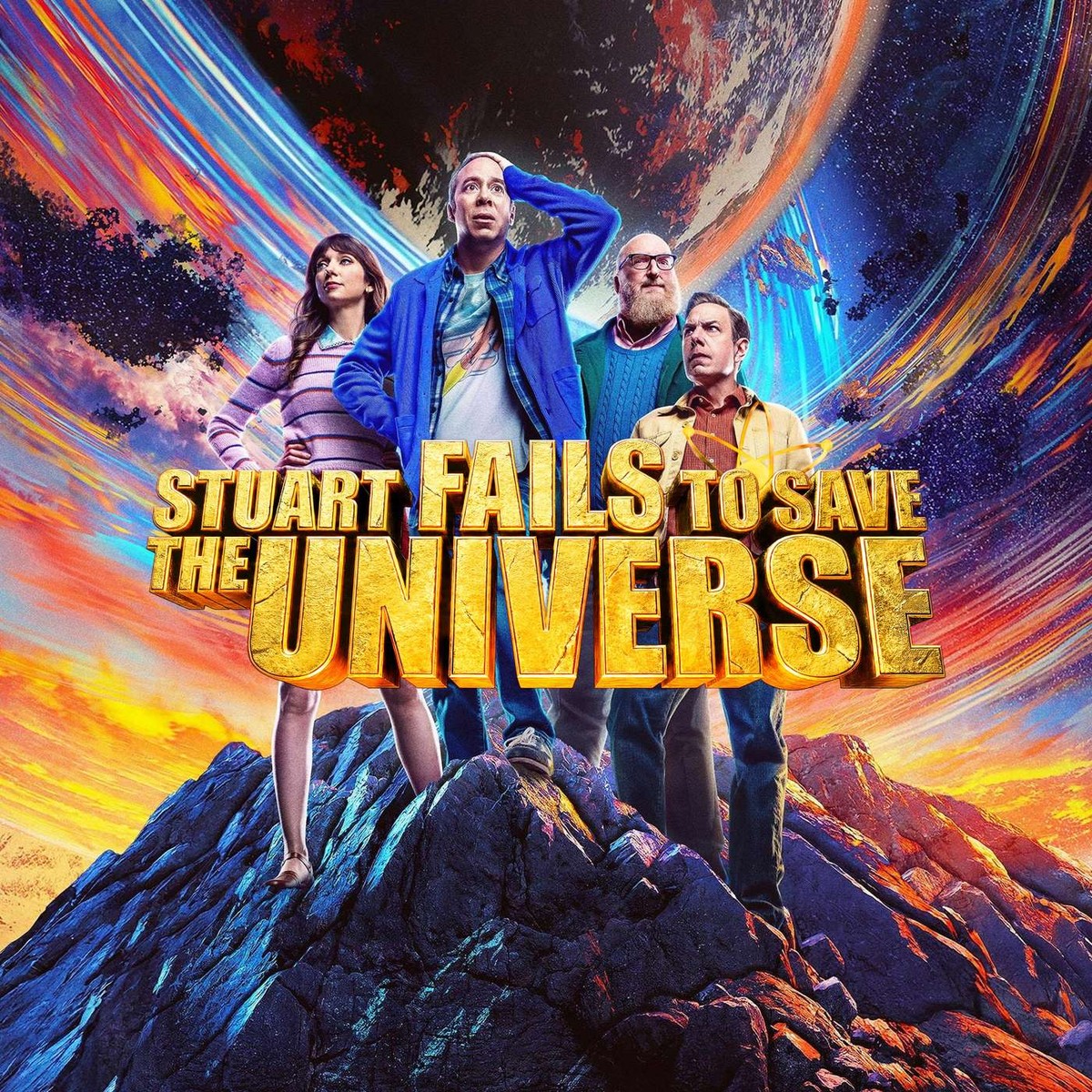
I’ll put my cards on the table early: I really enjoyed this show. The premise is great. Stuart accidentally breaks a quantum-interference device that Sheldon, Leonard and Howard built, triggers what the show calls a multiverse Armageddon, and is left responsible for cleaning up the mess. He’s joined by his girlfriend Denise, his geologist mate Bert, and quantum physicist Barry Kripke, and together they go jumping from one shattered reality to the next, trying to find a way to stitch everything back together. Each episode drops the gang into a wildly different universe, and true to the title, every attempt to fix things goes sideways in a new and spectacular way. The episodes aren’t too long either, running somewhere between about 16 and 26 minutes each, and there’s barely any filler. They’re straight into it, and then you’re away. In a world of streaming shows that pad everything out to an hour, that brevity is honestly refreshing. And here’s something I really appreciated as a long-time Big Bang fan: the sheer scale of it. The Big Bang Theory was predominantly an indoor show, filmed in front of a studio audience. It was the apartment, the university, the comic book store, Penny’s place, back to the apartment. With this series we get proper outdoor environments, the gang walking through burnt-out cities and jungles and grass fields, interacting with whole populations of strange people. Chuck Lorre has said that most of his career has been two people sitting on a couch talking, and that he wanted to push himself into unfamiliar territory with the special effects and computer graphics this time around. You can absolutely see it on screen. For a guy whose whole career is multi-camera sitcoms, this is a genuine reinvention, and it works.
Let’s talk about the cast, because I reckon they had a proper think about exactly which characters to build this around. Kevin Sussman is perfect as Stuart. That hangdog, apologetic, chronically unlucky energy translates beautifully into a hero role, precisely because he’s the least heroic man in any universe. Lauren Lapkus plays Denise, and if you know her from Orange Is the New Black or from her years in the improv and comedy podcast world, you know how quick she is. She gives the show a warmth that stops it tipping into pure absurdity. Brian Posehn is Bert, and Posehn is a comedy veteran going all the way back to Mr Show and The Sarah Silverman Program, plus he’s a lifelong comic book and metal guy in real life, so this role fits him like a glove. And John Ross Bowie’s Kripke is the secret weapon of the entire season. If you only know Bowie from Big Bang, go and check out Speechless, where he showed a completely different range. Here he’s the agent of chaos, and nearly every universe the gang visits gets worse specifically because Kripke is in it. That’s a fantastic engine for a comedy.
Universe of the Week
Now, the universes themselves. This is where the show absolutely sings. We get the gist of what’s going on straight from the word go, when the original Stuart turns up to tell our Stuart that he needs his help, and that’s when they learn they need the quantum-interference device. The first episode moves quickly, laying out the whole structure. We start in a post-apocalyptic world, with a great cameo from Raj, and a genuinely impressive bomb and fight sequence at Caltech, which Kripke is running as his own personal fortress. From there Raj gets the machine working, and they make their first jump. And along with the cameos from the main supporting cast, keep an eye out for the deep-cut ones too, because this whole show is scattered with them. Case in point: Penn and Teller show up, which is extra funny when you remember Teller actually played Amy’s father on The Big Bang Theory. One of my favourite recurring devices is the two customers in Stuart’s comic book store, Kyle and Trevor, played by Ryan Cartwright and Josh Brener. Brener, who you’ll also know from Silicon Valley, was actually in Big Bang as Dale, one of the store regulars. Whenever the gang lands back in the store, those two set the tone for what the new universe is all about. In the first universe they’re fighting over a comic until one kills the other. In the next, they’re buying comics and being suspiciously lovely to each other, and the guys immediately know something’s off. It’s such an economical piece of comedy writing. That second universe turns out to be run by a master computer, with everyone chipped through the neck. It looks too good to be true, and it is. Those chips suppress anger and electrocute you if you get too grumpy. And in a bit of casting I did not see coming, Christine Baranski turns up as the AI overlord. Leonard’s mother, now running an entire reality. That’s the kind of joke this show does brilliantly.
Episode three gives us the magic universe, where Bert is about to be burnt at the stake, Kripke abandons him, and Bert gets his revenge by turning Kripke into a penguin, because in this reality, Bert has magic. This builds to Bert in a full wizard duel with Wil Wheaton, and given Jonathan Frakes is directing episodes of this show, there’s a lovely Next Generation reunion energy floating around that whole thing. Then they discover Bernadette is a demon, and just before the gang jumps out, we see her as a giant green kaiju stomping through the city. It’s gloriously silly. Episode four, though, is where the show revealed it had more gears than I expected. Stuart wakes up in a mental hospital, very One Flew Over the Cuckoo’s Nest in style, with Amy as his psychiatrist, and he has to prove over a long stretch that he’s well enough to leave. There’s a fun cameo from Jon Cryer as a mountain guide in one of Stuart’s hallucinations, a lovely nod to Chuck Lorre’s Two and a Half Men, and even a tiny appearance from Weird Al Yankovic as a fellow patient with his accordion. But the episode keeps peeling back layers. Stuart gets out, sees an art gallery full of the universes he’s supposedly painted, finds Kripke as his neighbour with a wife and two kids, and slowly clocks that the details don’t add up. It ends with him in the comic book store, finding a comic based entirely on his own life, realising he’s being sent instructions and that none of this is real. When he finally fires up a new machine, the gang wakes up bald, floating in those giant liquid battery pods straight out of The Matrix. It’s one of the funniest single images of the whole season, and Stuart peeling away the fake reality around them to reveal a huge white room is striking filmmaking for a Chuck Lorre comedy.
From there the season keeps swinging. There’s a utopian jungle village where everyone is blissfully kind, and Kripke single-handedly pollutes an entire innocent culture until Bert’s wedding collapses into an all-out brawl. Watching paradise curdle in real time because of one petty physicist is absolutely hilarious. There’s the universe where people have cow stomachs and graze on grass at restaurants, which Stuart and Denise briefly decide they’d rather stay in, thanks very much. There’s a telepathy universe, from the episode titled Dexys Midnight Runners Get a Royalty Payment, where the guys hide their thoughts by singing Come On Eileen in their heads, and we get a Bernadette cameo as a dance teacher, a lovely throwback to the original show revealing she did the pageant circuit as a kid. That episode also kicks off the season’s wildest stretch, where the gang stumbles across another version of themselves, both groups start chasing each other through the slipstream between universes, and then a third set of them in army fatigues rocks up and steals a machine. That drags everyone into a war-torn universe, a trial, a firing squad, and a rescue from an alternate Penny, who ends up left behind in a universe of centaurs as a half-centaur herself, and honestly seems pretty happy about it. By this point it’s getting gloriously confusing. We could really use Sheldon in here to whiteboard exactly how this science works. And then the gang gets trapped inside an actual comic book, ending up in Gotham City itself. Fun bit of trivia there: the episode is called We Couldn’t Get Green Lantern, because the writers genuinely wanted Green Lantern and were told hands off, since HBO has its own Lanterns series. They turned a rights headache into the joke, which is very on-brand for this show.
If you’re wondering what this all reminds me of, it’s like someone fed Sliders and Quantum Leap through a sitcom filter, with a dash of Rick and Morty’s anything-goes multiverse logic and a little of that Everything Everywhere All at Once affection for its own losers. And if this show sends you anywhere afterwards, let it send you back to those. Sliders especially is a ’90s gem that deserves rediscovery, and if you’ve never seen Kevin Sussman pop up in things like Ugly Betty or the movie Hitch, he’s been quietly great in the margins for 20 years. This is the show that finally puts him front and centre.
Final Thoughts
So, is it perfect? No. By the back half, the machines and the duplicate gangs and the vortexes get properly tangled, and the show is sometimes more interested in the next universe than in fully wringing out the current one. A couple of realities I’d happily have spent a whole extra episode in. But that’s a complaint born of enjoyment. I wanted more of the good stuff, not less of the bad. The hit rate on the jokes is high, the cameos are pitched beautifully, the short runtimes keep everything zipping along, and there’s real warmth threaded through Stuart’s endless failure. It’s telling that the series was renewed for a second season in August 2026. This concept could run and run, and on this evidence, I hope it does.
But look, that’s just how it landed for me. Entertainment is subjective, and maybe multiverse chaos and comic store energy isn’t your thing at all, and that’s completely okay. What works for me may not work for you. But for my money, Stuart failing to save the universe is some of the most purely fun television I’ve watched all year, and I’ll happily follow him into the next broken timeline.
Rated OCT 2026LISTEN TO THIS EPISODE
Follow Frame 70 on your favourite podcast app and new episodes find you the moment they drop.