Lucy
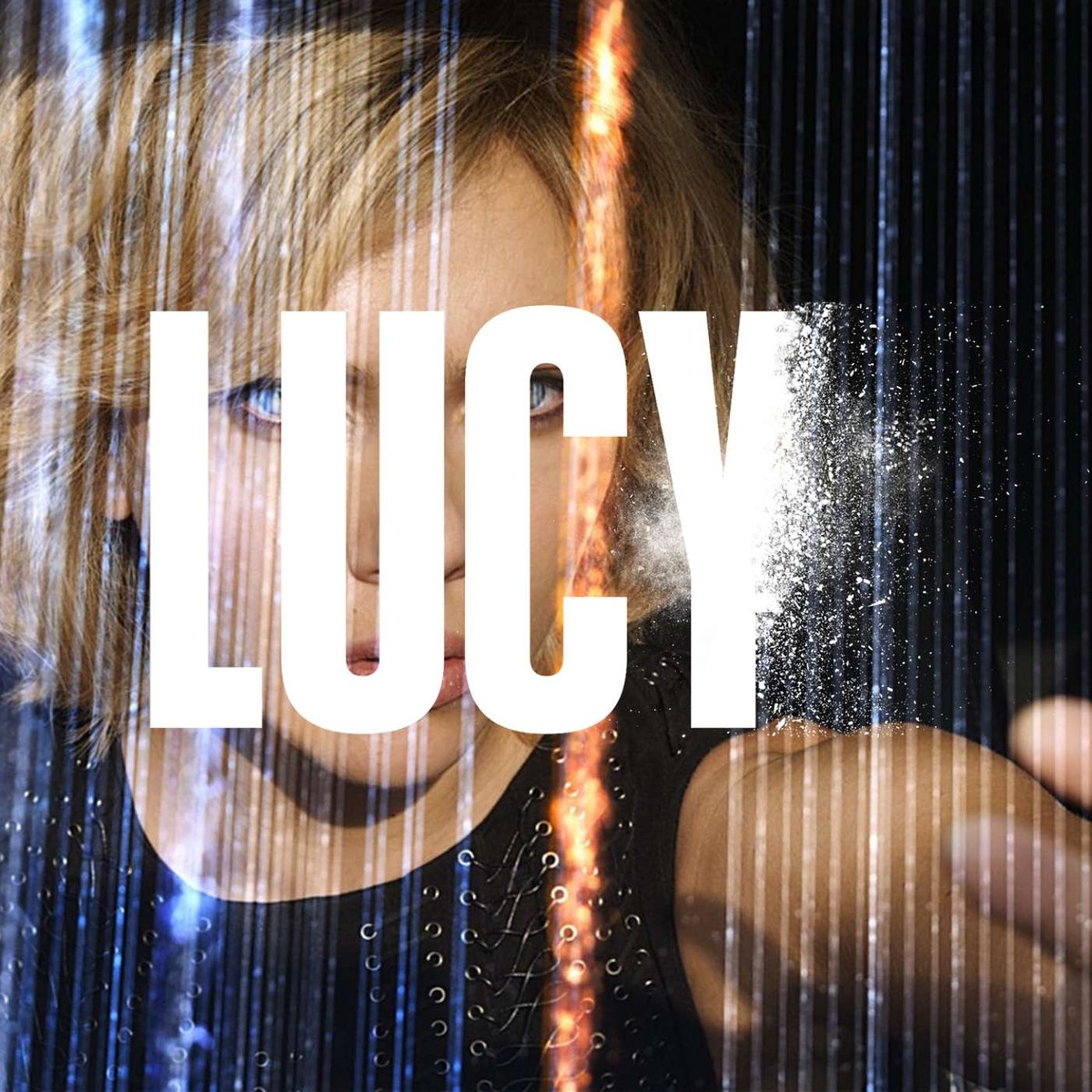
Luc Besson's lean, gloriously confident thriller hooked a sci-fi sceptic, powered by a Scarlett Johansson performance that makes an outrageous premise feel devastatingly real.
 7.8/10 · RECOMMENDED
 A bit of context before I get into what I thought, because Lucy is very much a Luc Besson film, and if you know Besson’s work, you know exactly what that means. This is the man who gave us La Femme Nikita, Leon: The Professional, and The Fifth Element. He has spent his entire career making films about extraordinary women thrown into impossible situations, and Lucy might be the most extreme version of that idea he’s ever put on screen. The whole film is built on that old chestnut, the idea that humans only use 10 percent of their brain capacity. Now, scientifically, that’s a myth, and the film knows it’s a myth, but Besson doesn’t care, and honestly, once the film gets going, neither did I. It’s a launchpad for the story, not a thesis. And it’s worth remembering where Scarlett Johansson was in 2014. She’d just done Her, where she played an artificial intelligence using only her voice, and Under the Skin, where she played something not quite human wearing a human face. Lucy slots right into that run, a third film in a row where Johansson plays a character slowly detaching from her own humanity. Looking back, it’s a fascinating stretch of her career.
From Crime Thriller to Something Stranger
So here’s my confession right up front: I’m not normally a sci-fi guy. It’s just not my default genre. But this movie really got its hooks into me, and I think the reason is that it doesn’t start as science fiction at all. It starts as a crime thriller, and a properly nasty one. Lucy is a student in Taipei, dating a guy called Richard she met at a nightclub, and Richard has a briefcase he needs delivered to a mysterious Korean businessman named Mr. Jang. When Lucy refuses, he handcuffs the case to her wrist, and just like that, she has no choice. She walks into that hotel, and within minutes Richard is dead, and Lucy is in the hands of one of the most frightening screen gangsters I’ve seen in a long while. Jang and his men surgically implant a bag of a new synthetic drug called CPH4 into her abdomen, so she can smuggle it to Europe as a drug mule alongside three other unfortunate men. That whole opening act is tense, brutal, and grounded, with not a superpower in sight. And then one of her captors kicks her in the stomach, the bag ruptures, the drug floods her system, and the film transforms in front of your eyes.
What surprised me most is how confidently the film changes gear. From the moment that bag leaks, Lucy starts unlocking more and more of her brain’s capacity, and Besson puts a running percentage counter on screen: 20 percent, 30 percent, 40. You always know exactly where she is on the journey and exactly how far she still has to go, and it gives the whole film this ticking-clock momentum. Crucially, the power comes with a cost. Her body can’t contain what’s happening to her. Her cells are essentially tearing themselves apart, and the only thing keeping her stable is more of the drug. So she’s not just hunting her captors for revenge. She needs those remaining bags, the ones inside the other mules heading to different cities across Europe, and she needs them before her own body gives out. I loved that. The most powerful being on the planet, and she’s also the most fragile. That tension carries the entire second half.
Johansson Is the Whole Reason It Works
Let’s talk about Scarlett Johansson, because for me she’s the whole reason this film works. Her performance is incredible. Think about what she’s actually being asked to do here. She starts the film as an ordinary, terrified young woman, sobbing and pleading in a hotel lobby, and by the end she’s playing something that barely qualifies as human anymore. The transformation happens gradually, scene by scene. You can watch the emotion draining out of her face as the percentage climbs. Early on there’s real fear in her eyes, real panic, and then slowly her voice flattens, her movements become precise, her reactions become almost clinical. She made me believe every stage of it. There’s a moment where she calmly tells someone that pain, fear, desire, they’re all just obstacles now, and the way she delivers it is chilling precisely because you remember the terrified girl from 20 minutes earlier. That’s proper acting range, compressed into a 90-minute film.
And the supporting cast around her is quietly excellent too. Morgan Freeman plays Professor Norman, the world’s leading authority on brain capacity, and he does that thing only Morgan Freeman can do: he stands at a lectern and delivers frankly outrageous pseudo-science with such warmth and gravity that you just nod along. Lucy sees his research and reaches out to him because he’s the only person alive who might understand what’s happening to her, and their scenes together give the film its heart. Then there’s Mr. Jang himself, played by Choi Min-sik, and if that name rings a bell, it should, because he’s the star of Oldboy, one of the great Korean thrillers of the 2000s. He barely speaks a word of English in this film and he doesn’t need to. He is pure menace. And Amr Waked as Pierre Del Rio, the French police captain Lucy pulls into her orbit, ends up being the film’s last thread connecting her to ordinary humanity. There’s a lovely little beat between them late in the film that says more about what Lucy is losing than any percentage counter ever could.
Thematically, there’s more going on here than the trailer ever suggested. Professor Norman has this idea that runs through the whole film, that the purpose of life is to pass on what we learn, to hand knowledge forward. And once Lucy understands that she’s dying, that her transformation only ends one way, the film stops being a revenge thriller and becomes something closer to a race against her own mortality. She’s not trying to save herself anymore. She knows she can’t be saved. She’s trying to stop this drug reaching the streets and reaching young people, and she’s trying to leave something behind that matters. I found that surprisingly moving for a film that also features telekinesis and gangsters with rocket launchers.
Besson Having an Absolute Ball
On the technical side, Besson is having an absolute ball. He intercuts the early scenes with nature documentary footage, a mouse approaching a trap, cheetahs circling a gazelle, and it’s bold, borderline cheeky filmmaking, but it works. It tells you straight away this film has a sense of humour about itself. And then there’s the Paris car chase. Lucy commandeers Del Rio’s police car and drives it through the streets of Paris against traffic, weaving through oncoming cars at full speed while he clings on beside her in sheer terror, and the driving and stunt work in that sequence is incredible. Real cars, real streets, real crunching metal. Besson has always been one of the great European action directors, and that sequence is him showing off in the best possible way. I’d also point out the runtime. This film is done in under 90 minutes. No bloat, no wasted scenes. In an era of two-and-a-half-hour blockbusters, there’s something almost radical about a film this efficient.
If Lucy leaves you wanting more of this flavour, there are some natural next steps. Limitless, with Bradley Cooper, plays with the same unlocked-brain premise but keeps it grounded in ambition and greed rather than going cosmic. The two films make a fascinating double bill because they take the exact same idea in opposite directions. Transcendence came out the same year and pairs nicely too. That one also stars Morgan Freeman, and it’s also about a consciousness expanding beyond the human body. And the final stretch of Lucy, without giving away the details, reaches for imagery that owes an obvious debt to Stanley Kubrick’s 2001: A Space Odyssey. Besson is clearly a fan, and once you spot it, you can’t unsee it. And of course, if Choi Min-sik caught your eye, do yourself a favour and seek out Oldboy. Just brace yourself first.
So, final thoughts. Lucy is not a film that survives strict scientific scrutiny, and it doesn’t want to. It’s a lean, stylish, gloriously confident piece of high-concept entertainment from a director who commits to his premise 100 percent, quite literally, and a lead actress operating at the top of her game. It won me over, and I say that as someone who usually keeps sci-fi at arm’s length.
Listen to this episode
Follow Frame 70 on your favourite podcast app and new episodes find you the moment they drop.