Outbreak
The virus is just the weather. Wolfgang Petersen's 1995 thriller is really about how far the people in charge will go, who they'll sacrifice, and why it hits harder now than it ever did.
 8.0/10 · GREAT
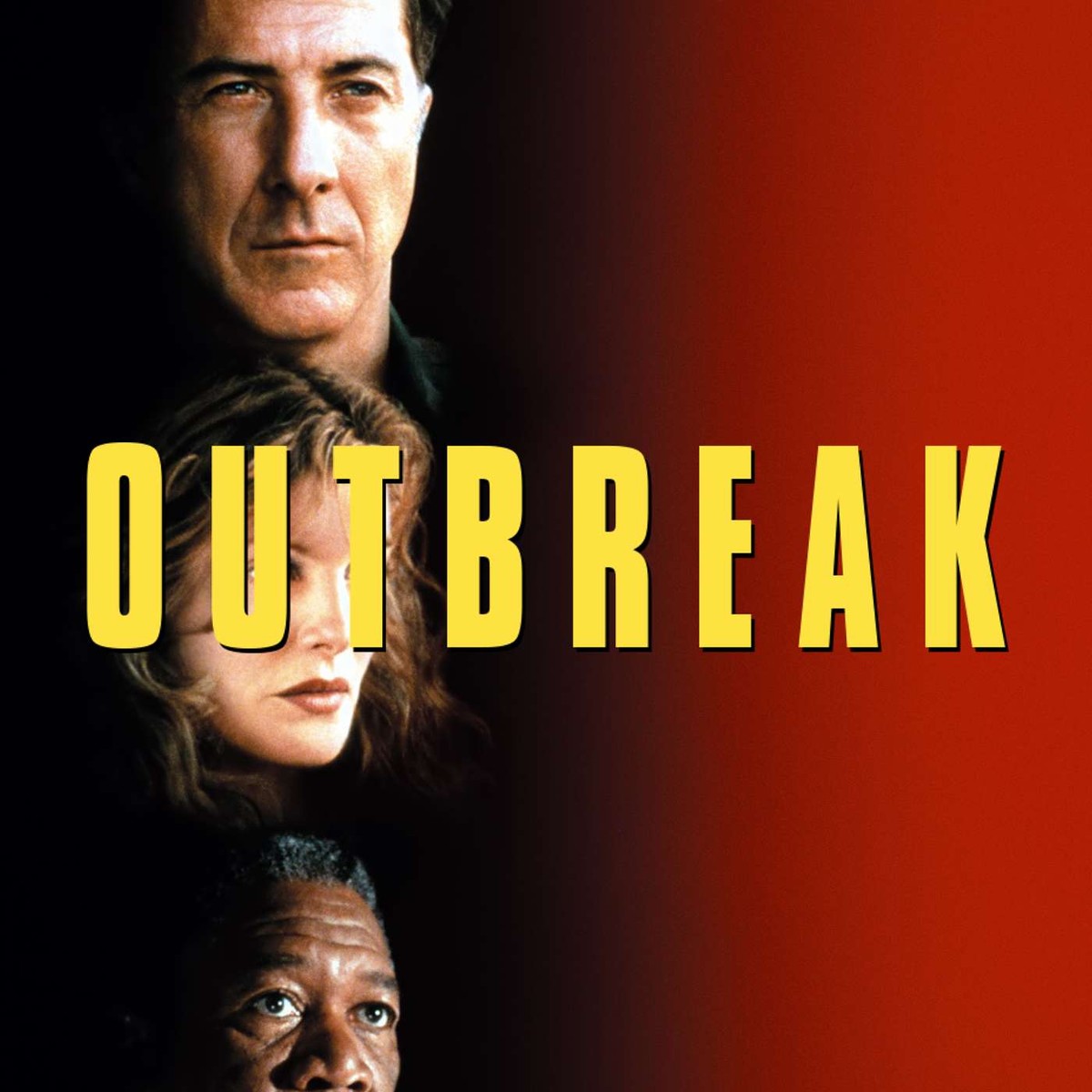
 Outbreak is the 1995 film directed by Wolfgang Petersen and starring Dustin Hoffman, Rene Russo, Morgan Freeman, Donald Sutherland and Cuba Gooding Jr. Let me set the scene a little before we dig in, because the context here is half the fun.
The Fear That Built It
Back in the mid-’90s there was a real fear rippling through the world about a virus most people had never heard of before: Ebola. Richard Preston had put out a book called The Hot Zone that had everybody talking, a non-fiction account so frightening that grown adults were reading it with the lights on. And Hollywood, being Hollywood, went chasing that fear. Now, people will tell you Outbreak is the film of that book, and I understand why, but that’s not quite the story. Outbreak was its own screenplay, written by Laurence Dworet and Robert Roy Pool, riding the same wave of dread. There was actually a rival picture in the works, a proper adaptation of The Hot Zone with some big names attached, and Outbreak got out of the gate first and effectively knocked it over. That book adaptation eventually turned up years later as a television series. So what we have here isn’t the book on screen: it’s the same nightmare, told a different way.
And the man telling it knew exactly what he was doing. Wolfgang Petersen, who sadly left us back in 2022, was one of the great pressure-cooker directors. This is the fellow who gave us Das Boot, that suffocating submarine picture where you can practically feel the walls closing in. He did In the Line of Fire with Clint Eastwood, and he’d go on to do Air Force One and The Perfect Storm. Tension was his instrument. He played it like a musician. So when you hand a director like that an invisible enemy, a thing you cannot see, cannot shoot, cannot reason with, you are giving him the perfect toy.
I remember seeing this on the big screen back in 1995, and I’ll be honest with you, at the time it played as a cracking thriller and not much more. A what-if. A ride. And as it happened, a real Ebola outbreak flared up in Zaire that very year, right around the time the film arrived, which put a real chill into the room. But it was still, to my mind then, a piece of entertainment. A very good one. I came back to it a few years ago, though, and I’ll come to why that mattered, because it was not the same film the second time around.
A Monster Movie Played Dead Straight
Let me tell you how it opens, because the opening is the best thing in it. We’re in 1967, in a jungle camp in Zaire, and there’s a sickness tearing through the men. The Americans arrive, and there’s this promise of help, of rescue. And what arrives instead is something far colder than anyone in that camp is expecting. It’s a gut-punch of a prologue, and it does two jobs at once: it terrifies you, and it quietly tells you who the real villain of this picture is going to be. It isn’t the virus. Hold that thought.
Jump forward nearly 30 years and we meet Dustin Hoffman as Colonel Sam Daniels, an army virologist, the sort of stubborn, rule-breaking fellow who’s convinced of a danger that nobody above him wants to hear about. He’s the man with the theory no one believes, and Hoffman plays him beautifully: rumpled, exhausted, a bit of a pain in the neck to his superiors, and absolutely right. Meanwhile, quite separately, a little monkey is being smuggled out of Africa and into the United States, carrying something it shouldn’t, and when a would-be seller can’t offload the animal, it gets turned loose in the woods outside a small California town called Cedar Creek. And that’s the engine of the whole picture: this quiet, almost accidental chain of small human mistakes, and the terrible thing that grows out of them.
What Petersen does with the spread of it is where his craftsmanship really shines. There’s a sequence, and I won’t overcook it for you, where he traces how the sickness moves from one person to the next through the most ordinary human moments. A cough. A kiss goodbye. A cracked vial. And then a scene in a packed cinema where he lets you watch the thing drift invisibly through a room full of people who have no idea. Back in 1995 that was a clever, chilling piece of filmmaking. I’ll tell you how it plays now in a moment.
The cast is where this film really punches above its weight. Hoffman anchors the whole thing, but look who’s standing around him. Rene Russo plays Robby, his ex-wife, herself a scientist, and Petersen wisely lets their prickly, unfinished marriage carry a thread of real feeling through all the panic. Morgan Freeman is the general caught in the middle, a man with a conscience wrestling against the orders coming down from above. Donald Sutherland is the fellow giving those orders: cold, institutional, dangerous in that quiet way Sutherland did so well, the danger of a man who has decided some things are worth more than people. And then, marvellously, there’s a very young Cuba Gooding Jr. as Daniels’ helicopter pilot, two years before Jerry Maguire made him a household name, a young Patrick Dempsey turning up as the smuggler, and Kevin Spacey in there too. That is an extraordinary bench for what is, on paper, a genre thriller. Petersen got serious actors to take a monster-movie premise dead seriously, and that’s the whole trick of it.
Because here’s what the film is actually about, underneath the hazmat suits and the helicopters. It is not really about a virus at all. The virus is just the weather. The real story is how far the people in charge will go, what they’ll cover up, who they’ll sacrifice, to protect a secret and to protect themselves. There’s a plan hanging over that little town of Cedar Creek all the way through the second half, a truly monstrous plan, and the tension isn’t only “will they find a cure,” it’s “will the men meant to be protecting these people decide the people are expendable.” That’s a far more frightening question than any germ, and it’s what lifts Outbreak above the pack. I won’t walk you all the way to the finish, because the last act really is much better discovered in the moment, and I’d rather you feel it than have me describe it.
The Film That Changed Underneath Me
And this brings me to the thing I’ve been circling, the connection that’s stayed with me. When I first saw Outbreak, I watched it the way you watch a rollercoaster: thrilled, a bit shaken, and then out into the car park and off home. But I came back to this film after we had all come through something none of us saw coming. The masks. The empty high streets. The day-to-day worry about the air in a room. And I sat down to that cinema scene, the one where the sickness drifts silently through a crowd of ordinary people going about their evening, and it was not a clever special effect any more. It was a memory. We had all, in our own way, sat in that room. A picture that once felt like a fantastic, faraway story suddenly felt like something we’d been through together. That’s a strange and powerful thing, for a film to change underneath you like that while you’re standing still. The film didn’t move. We did. And Outbreak, of all the pictures I might have expected it from, turned out to have been waiting patiently for the world to catch up to it.
I’ll be straight with you: it isn’t a flawless picture. The science is loose, and it knows it; things happen in an hour that ought to take months, and the final stretch tips over into the big, tidy Hollywood heroics of its era. If you want cold, clinical realism, there are later films that do the procedure better. But Outbreak was never really after realism. It was after your pulse, and it gets it every single time. It is gripping, it is superbly acted, and it has aged into something more meaningful than it ever set out to be.
Of course, that’s simply how Outbreak landed for me, watching it across two very different chapters of my own life. Entertainment is subjective, and a film that unsettled me to my bones might strike you as good old-fashioned popcorn, or the other way round entirely. What moved me may leave you cold, and that’s perfectly all right. I’d love to know how it sits with you.
Listen to this episode
Follow Frame 70 on your favourite podcast app and new episodes find you the moment they drop.