Masterplan
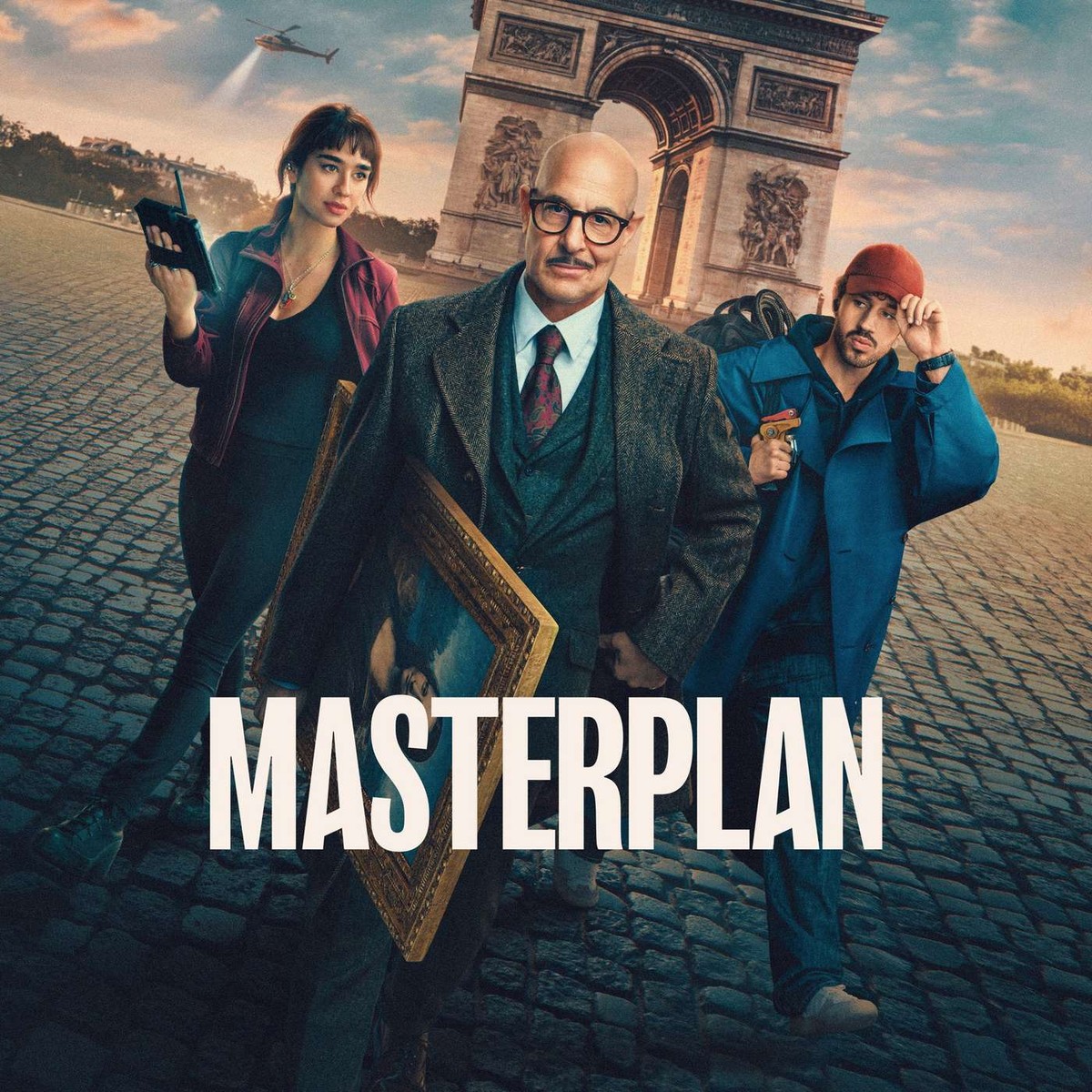
Stanley Tucci's retired master thief targets the Mona Lisa, but the Louvre's security isn't the real problem. It's the two long-lost kids he's just recruited for the job.

There’s some background worth knowing before I dive into the review, because this one is actually a bit of a milestone. Prime Video gave us early access to Masterplan ahead of its release on October 16, and it turns out this is the platform’s first-ever French-Italian Original film. It’s made by Gaumont and Amazon MGM Studios, filmed in English, and if the name Gaumont rings a bell for you, it should. That’s the studio behind Lupin, the hugely popular heist series, so they know their way around a stylish European robbery. It’s directed by Thomas Vincent, who co-wrote the screenplay with David Wolstencroft, and I’ll come back to those two names a bit later because their backgrounds tell you quite a lot about what this film is going for. On paper, it’s a heist comedy about a legendary retired thief who decides to come out of retirement for one last, enormous score: stealing the Mona Lisa from the Louvre in Paris. But here’s the thing. This is not simply a story about a master thief assembling a team for the perfect robbery. There’s a family complication baked right into the premise, and it’s that complication that makes the whole operation considerably more difficult, and considerably more fun.
The Setup
So let me set it up for you. At the centre of the story is Roger, played by Stanley Tucci, a legendary thief who decides to undertake an extraordinary heist. He knows he can’t pull off something of this scale alone, so he recruits two young strangers with very different areas of expertise. Chiara, played by Simona Tabasco, is a talented Italian cybercrime expert he finds in Rome. Jay, played by Victor Belmondo, is a French explosives specialist from Paris with plenty of confidence, maybe a little too much. Both of them have skills that are valuable to Roger’s ambitious scheme, but neither of them is remotely prepared for what comes next. Roger reveals that the two of them are long-lost siblings, and that he is their father. Suddenly, what began as an elaborate criminal operation becomes an unexpected family reunion, with three people who have an awful lot to learn about one another forced to work together under the highest possible pressure. And honestly, that’s what sold me on this film. It’s an intriguing premise, and it gives Masterplan something a little different from the usual heist movie.
Let’s talk about the target for a second, because stealing the Mona Lisa is about as ambitious as a movie heist gets. Leonardo da Vinci’s painting is one of the most recognisable works of art on the planet, and any attempt to take it out of the Louvre immediately raises the stakes to an absurd level. And here’s a bit of trivia I love: it has actually happened before. Back in 1911, the painting really was stolen from the Louvre by Vincenzo Peruggia, a former employee of the museum, and it was missing for more than two years. Now, Masterplan isn’t based on that theft, its story is entirely fictional, but knowing that history gives the whole premise a lovely bit of texture. This isn’t pure fantasy. Someone actually walked out of the Louvre with this painting once. The setting also makes for a good-looking film. Paris is the perfect backdrop for a story about art, deception and a complicated criminal plan, and the production filmed across Rome, Paris and the French Riviera, so the film has a real sense of place. It feels European in the best way. It’s not just the mechanics of a robbery, it has atmosphere.
Now, the thing about heist films, and I say this as someone who will watch pretty much any heist film put in front of me, is that they depend on the audience getting involved in the preparation. We want to see how the characters intend to accomplish something that first appears impossible, what obstacles stand in their way, and whether their carefully constructed plans can survive the unexpected. Much of the appeal lies in watching talented people combine their different abilities to overcome problems. But a good heist story also understands something else: even the most carefully considered plan can unravel when people make mistakes, misunderstand one another, or let their emotions get in the way. And that’s exactly where Masterplan plays its best card. Roger isn’t just bringing together a group of skilled criminals. He’s trying to work with two people who have just discovered they share a much closer connection than they ever imagined, and that family relationship becomes just as important to the story as the robbery itself. The film explores the difference between choosing your colleagues and being thrown together with family members you barely know, and that’s where a lot of the comedy comes from. When disagreements arise, these characters can’t simply walk away from one another without putting the whole plan at risk. That tension powers the entire movie.
The Performances
Let’s get into the performances, starting with the obvious one: Stanley Tucci. For me, Tucci is one of the main attractions here, full stop. He’s had this wonderfully varied career, moving between comedy, drama and more serious thriller roles. If you’ve never seen Big Night, by the way, do yourself a favour and track it down, because it’s one of his finest hours. And of course most people know him from The Devil Wears Prada, where he steals scenes for a living. A character like Roger has to be convincing as an experienced thief, someone capable of organising an operation of extraordinary proportions while keeping his composure when things don’t go to plan. And Tucci is such an interesting choice for a role that calls for confidence, intelligence and a real sense of mischief. There’s so much humour in the contrast between Roger’s criminal experience and how completely unprepared he seems for the family complications he’s brought into the situation. Think about it. The relationship between a father and his adult children can be complicated under ordinary circumstances. Put it in the middle of a major art theft and you’ve got an entirely different set of problems. Roger might have decades of experience organising criminal operations, but being a parent? That’s a different challenge altogether, and watching a master planner flounder at it is where the film finds a lot of its charm.
The other two central characters are just as important, and the casting here is well worth talking about. Simona Tabasco, who many of you will know from The White Lotus, plays Chiara, whose cybercrime expertise gives her a specialised role in the operation. If you enjoyed her in that series, she’s a strong reason to check this one out. And then there’s Victor Belmondo, who plays Jay, the explosives specialist whose confidence and personality create some friction within the group. Now here’s a connection I love: Victor Belmondo is the grandson of Jean-Paul Belmondo, the French screen icon. There’s something rather fitting about a Belmondo appearing in a slick French crime caper, given his grandfather’s place in the history of French cinema. The two of them each bring different skills to the table, but their newly discovered family connection means they also have to deal with personal questions that can’t be solved through technical expertise. Chiara and Jay have to decide how to respond to a father who suddenly appears out of nowhere with an extraordinary revelation, and an even more extraordinary request. The film gives all three of them enough personality to make their interactions engaging, and that matters enormously. The heist provides the framework, but it’s the people involved who decide whether the audience becomes invested in what happens. Here, I was invested.
Comedy, Suspense and the People Behind the Camera
One of the biggest challenges for a film like this is finding the right balance between comedy and suspense. A robbery involving the Mona Lisa naturally suggests a high-stakes operation: security to get past, complicated logistics, the ever-present possibility that something goes wrong. At the same time, the family reunion brings a much lighter element, with amusing exchanges and unexpected disagreements. And it’s a genuine tightrope. If the comedy overwhelms the robbery, the central operation loses its sense of danger. If the film concentrates too heavily on the criminal mechanics, it misses the chance to explore the unusual family dynamic that sets it apart from other heist films. What I found here is that the film lets the humour and the suspense complement one another. The characters’ personal disagreements create complications for the plan rather than distracting from it. Whether it gets that balance exactly right for you is yours to decide, but the premise certainly offers plenty of both, and for me the mix worked. Pacing helps too. At 107 minutes, Masterplan has a reasonable amount of time to establish its characters, develop the family conflict and build towards the central heist, without ever dragging its feet. The characters’ relationships had time to develop, while the operation itself kept up a steady sense of anticipation.
And this is where I want to come back to the people behind the camera, because the pedigree here explains a lot. Thomas Vincent directed episodes of Bodyguard and Reacher, two shows built entirely around tension, complicated plans and characters operating under pressure. His co-writer, David Wolstencroft, is the BAFTA-winning writer behind Spooks and The Escape Artist. So between them, you’ve got filmmakers who understand how to construct suspense and how to keep an audience guessing. Add Gaumont’s Lupin heritage into the mix and you can see exactly why this film feels confident in its genre. The Louvre and the Mona Lisa are instantly recognisable, so the real challenge was making the story surrounding them feel fresh and entertaining, and the family angle is exactly how they pull that off. If you finish this one and want more in the same vein, Lupin is the obvious next stop, and if you want to see Vincent handling pure tension without the laughs, those Bodyguard episodes are a masterclass.
So, final thoughts. Masterplan has an appealing combination of ingredients: an ambitious art theft, an experienced criminal mastermind, two talented recruits, and a family revelation that threatens to complicate everything. The relationship between these three people gives the film its strongest source of humour and conflict, and the premise is far more unusual than a straightforward robbery thriller. Rather than concentrating only on whether they can steal the Mona Lisa, the film also asks whether three people with an unexpected family connection can learn to work together when the pressure is on. I would love to tell you about the twists and turns, but honestly, this one is much better discovered on screen, so I’ll leave the details for you to find.
Rated OCT 2026LISTEN TO THIS EPISODE
Follow Frame 70 on your favourite podcast app and new episodes find you the moment they drop.