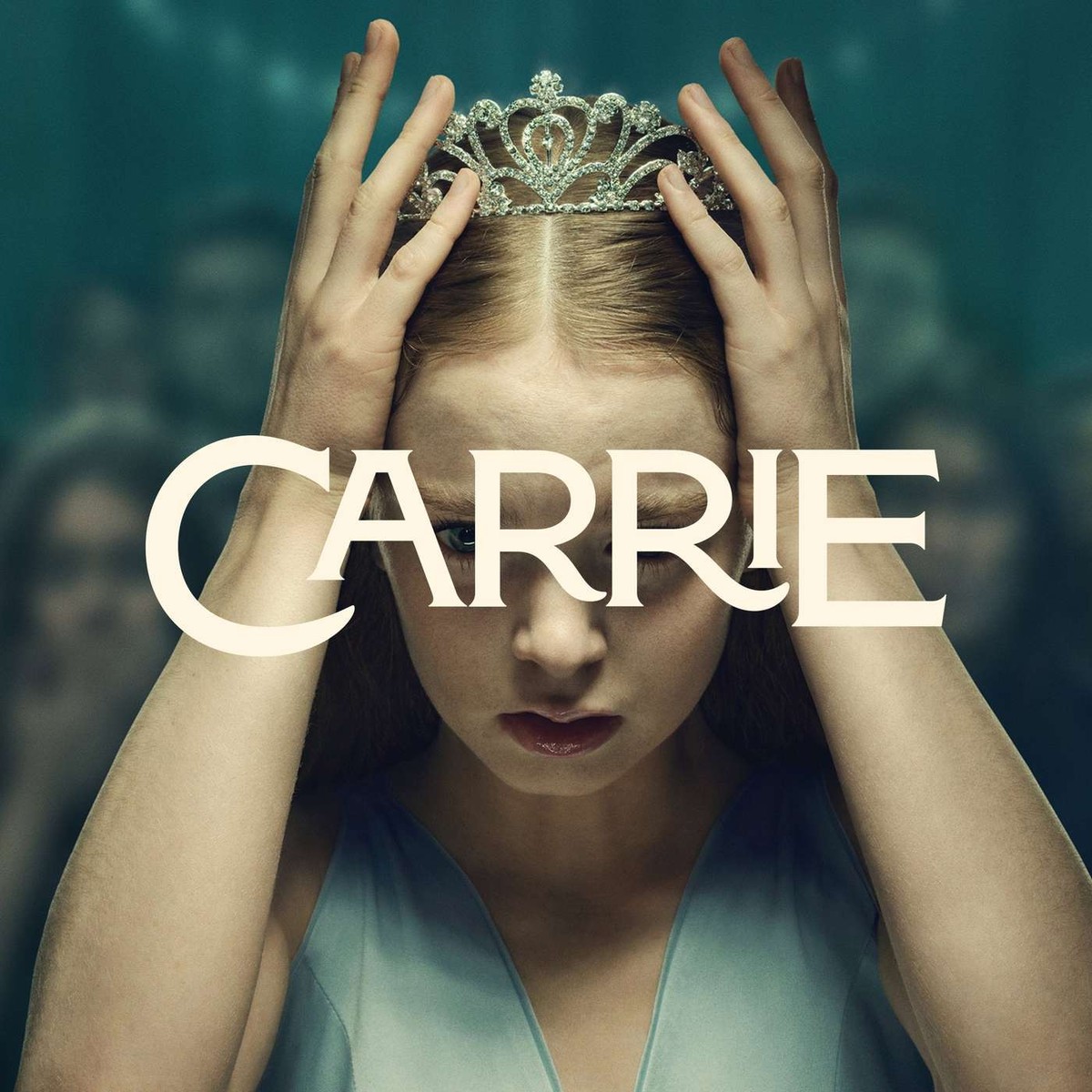
Carrie
Mike Flanagan gives Stephen King's debut eight hours to breathe, and asks whether we're watching a hero, a monster, or something far more complicated take shape.

Now, this one is a little bit special, because I’ve been waiting for it for a long time, and thanks to the lovely people at Prime Video, I’ve had the chance to watch the full first season early. All eight episodes, done and dusted, and I’ve got thoughts. Prime Video is dropping the whole season in one go on Wednesday, October 7, so here’s what I want you to do. Put a reminder in your calendar, buy the popcorn, and get ready to settle in with that warm, fuzzy Stephen King classic. I’m kidding, obviously. Maybe leave a light on, because this one gets a little jumpy in places. And because this is an early look at the show, I’m deliberately keeping things vague. No episode breakdowns, no run-throughs, no telling you what happens and when. This is my take on the season as a whole, and whether I think it pulled it off.
Flanagan Meets King, Again
Quick bit of background first, because honestly, it shapes everything about how I watched this. Mike Flanagan is the reason I got into horror at all. Before his work, I didn’t go near the genre, wouldn’t touch it. Then somewhere along the way his shows pulled me in, and now I’ve seen everything the man has made, and I look forward to whatever he does next the way some people look forward to a new album from their favourite band. And the thing I love most is when he takes on Stephen King, who’s another long-time favourite of mine. He’s done Gerald’s Game, he’s done Doctor Sleep, he’s done The Life of Chuck, and now he’s taking on Carrie, which is a big deal, because this is where it all started for King. The novel came out in 1974, it was his debut, the famous film followed in 1976, and the story has been retold a few times since. So this isn’t a story we don’t know. The question going in was never what happens. It was whether eight hours of television could find something new in it. And honestly? It really does.
Because this has a genuinely different feel from the Carrie we’ve seen before. The first episode takes its time grounding us and building Carrie up as a person before anything else, and I love the documentary-style framing the show uses, with people talking to camera as if they’re recounting something that has already happened. But the biggest difference here is simply room. Instead of a two-hour film, we get eight hours of storytelling, and that means a much more fleshed-out Carrie than any version before it. There’s background lore from King woven through it, and some lovely little Easter eggs scattered along the way too. We all know King loves tying his wider novels together in small ways, and Flanagan fills those shoes with absolute ease. He’s had plenty of practice by now: The Haunting of Hill House, The Haunting of Bly Manor, Midnight Mass, The Fall of the House of Usher. The man knows how to build a world on television. Now, to fill eight hours, the story needed more than the book alone, so Flanagan adds side stories and new elements of his own, and I’ll be honest with you, they don’t all land 100 percent. But they’re good little additions on the whole, and crucially, they never take much away from the actual story. That’s the trade you make for the long format, and for me, it was worth it.
A Carrie for 2026
So here’s the setup, kept nice and broad. Carrie White has spent her whole life at home with her mother, Margaret. In this version, her father is part of the story, and his sudden death is the starting point for everything. Carrie has been homeschooled her entire life, and losing him is what pushes her out of the house and into an actual school for the first time. Imagine that for a second. Years of isolation, and then you’re dropped into the middle of a modern high school with no armour at all. The show keeps the classic Carrie dynamic fully intact. Carrie comes from a less privileged home than a lot of the kids around her, and that gap is where so much of the cruelty comes from. And just like the book and the films, the bullying comes from her mother too, and we need that, because without it there’s no Carrie. It’s the driving force that changes her. But what’s new here is social media, and it brings this story into 2026 brilliantly. It becomes the engine under the whole show. Humiliation used to be something that happened in a hallway and faded. Now it gets filmed, shared, commented on, and it never goes away. And by the midway point, that whole side of the show takes a bigger, darker turn. It starts with Carrie, then it spreads, until it’s touching nearly every student and teacher in the school, which is exactly how these things work in the online climate we’re all swimming in. As the season goes on, you can genuinely feel the whole school getting angrier. The kids are turning on each other, and even the teachers’ personalities start to shift. It’s quietly one of the most unsettling things in the show.
Now, I’ll tell you what my big worry was going in. With a much younger Carrie than we’ve seen in the film versions, and a story set in and around a school, I was nervous this would lean too far towards a teenage audience. We’ve all seen shows fall into that trap, where the adult characters fade into wallpaper and older viewers quietly check out. The good news is that doesn’t happen here. The teachers and the parents are front and centre, and the themes are properly shared between the young characters and the adults, which really grounds the whole thing. I won’t pretend there weren’t a few moments mid-season where that worry flickered back up for me. But by the end, the show gets the mix absolutely right, and that balance is a big part of why it works.
Let’s talk performances, because this is where the show really sings. If you’ve watched Flanagan’s previous series, you’re going to spot a ton of familiar faces, because the man has his regulars. Samantha Sloyan is here, Kate Siegel is here, Rahul Kohli is here. It’s like a travelling theatre company at this point, and honestly, I find it comforting. If you’ve never explored his back catalogue and you enjoy this, Midnight Mass and The Haunting of Hill House are waiting for you, and you’ll recognise half the cast when you get there. But the casting I really want to talk about is Carrie herself. Summer H. Howell is a really, really good choice. She carries this sense of naivety, especially across the early episodes. Her eyes are so wide because everything is new to her. She looks so innocent, looking around, smiling, soaking up all these experiences out of the house and away from her mother. And I just have to say it: I don’t know about anyone else reading this, but this girl is extremely happy to be at school. I was never that happy. Not once. But jokes aside, she does a remarkable job with the emotional range this role demands, and this is a role that demands a lot. I’m putting my money down right now that we see a great deal more of her in the future.
Fingerprints, Boiling Points and That Night
And then there are the Flanagan fingerprints all over this thing. If you’ve seen Hill House or Bly Manor, you’ll know what his camera likes to do. He’s so good at hiding figures in the background of a frame and slipping in tiny jump scares that reward the people paying attention, and all of that is here. If you enjoy Mike Flanagan, you will feel completely at home. I’m also glad to report he brought back the prayer closet from the films. Because, you know, it’s not like that thing haunted my childhood or anything. And rather than following the 1976 film, Flanagan goes back to the bigger, darker scope of King’s novel, which feels like exactly the right call for a season of television.
As for how it builds: the deeper we get into the season, the more Carrie’s emotions start to take their toll, and her telekinesis grows a little stronger right alongside them. Just like the book and the films, a big part of the middle stretch is Carrie working out what she can actually do, and starting to hone it. And by the home stretch, everything is at boiling point, ramped up, simmering, right on the brink of exploding, and those final episodes are tense. I am not going to say a word about what happens. What I will say is that the last episode brings everything together, building towards the night every Carrie fan knows is coming. The school prom. And that’s all you’re getting from me, because it is so much better discovered on screen. But the question this show leaves you with is the same one the book and the films leave you with, and it’s the reason this story has survived for 50 years. We start out right beside Carrie. We watch her get bullied at school and bullied at home, and we feel for her, really feel for her. But do those feelings hold by the end, when she’s using her powers to defend herself? Has Carrie been pushed so far that she’s become the one doing the bullying, or is it justified? Are we watching the making of a hero, a monster, or something far more complicated? That’s a question you’ll have to answer for yourself, and the social media layer gives it a sharper edge than it’s ever had.
So, final thoughts. Look, I might be a bit biased here, because I enjoy everything Mike Flanagan does, and he’s the reason I’m in this genre at all. But I really did enjoy this. I don’t know what it is about Flanagan on television, but you just cannot look away, and every episode leaves you needing the next one immediately. This is properly binge-worthy TV. It’s jumpy in all the right places, it’s got real weight in its themes, and it balances the darkness with those softer human moments better than most shows even attempt. The new additions don’t all land perfectly, and there were moments where I worried about the tone, but the season as a whole won me over completely. I’d happily watch more, and I’m very curious to see whether Prime Video comes back around for a second season.
But as always, that’s just how this one landed for me. Entertainment is subjective, and a slow-burn, season-long take on a story this famous won’t be for everyone. What works for me may not work for you, and that’s completely okay. But for my money, this is the best kind of retelling: one that knows exactly why the original mattered, and finds a brand new reason for it to matter now.
Rated OCT 2026LISTEN TO THIS EPISODE
Follow Frame 70 on your favourite podcast app and new episodes find you the moment they drop.