The Terminal List
Four years on, James Reece goes global in a dense, double-crossing espionage thriller that starts slow, takes one unexpected detour, then hits full speed from episode five and never lets up.

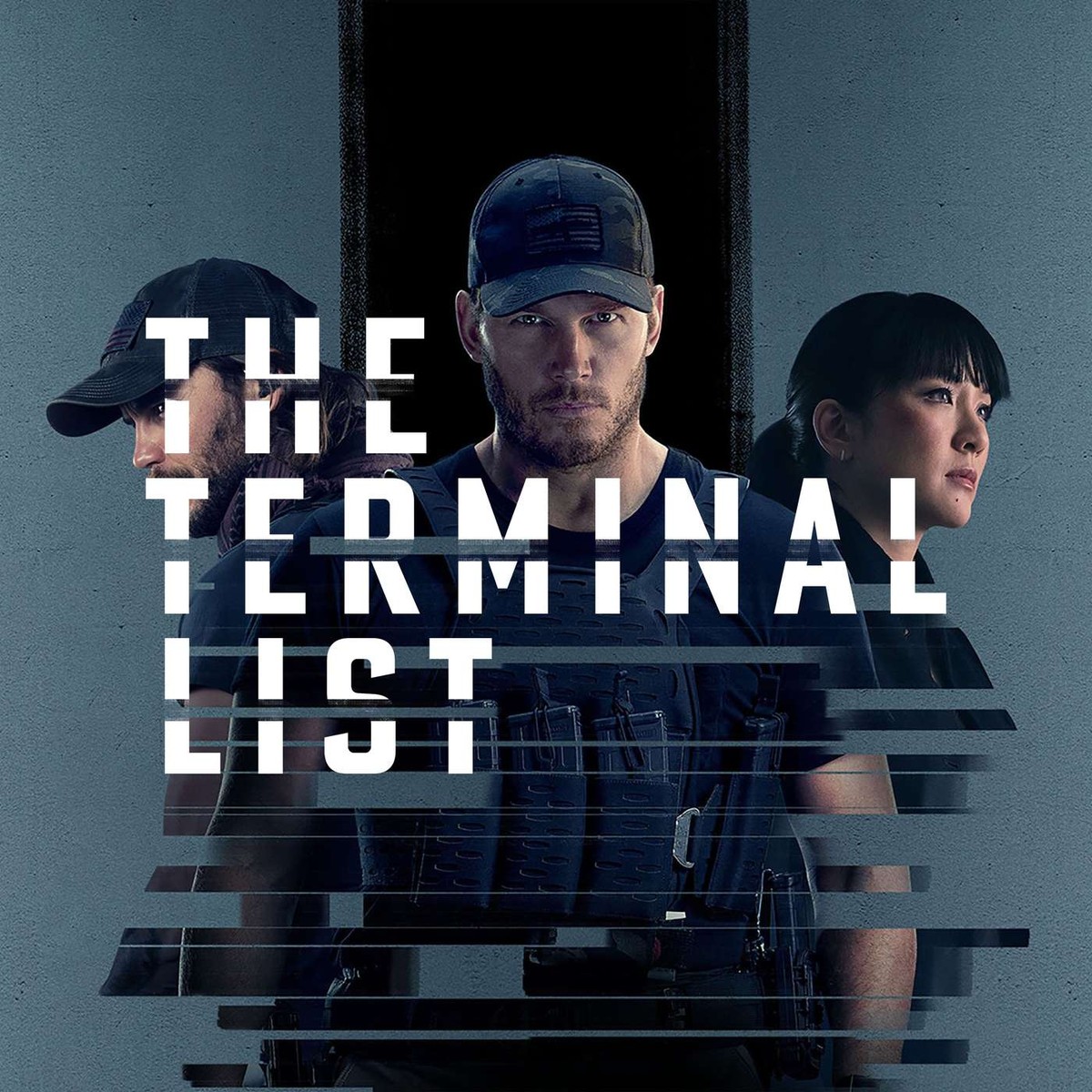
Before I get into what I thought, there’s some background worth knowing here, because it shapes how you come into this season. It has been four years since Season One of The Terminal List. Four years. That is a seriously long gap between seasons of any show, and I’ll be upfront with you: it’s one of my gripes with this one, and I’ll come back to it later in the review. Now, in between those two seasons we did get the spin-off series, Dark Wolf, which I really enjoyed, so I came into Season Two with high hopes that it would follow that same blueprint. This new season is adapted from Jack Carr’s second novel, True Believer, and the big shift this time around is in the shape of the show itself. Season One was a psychological revenge thriller: tight, personal, driven by grief and rage. Season Two opens all of that out into a globe-trotting espionage thriller, taking Reece across the Indian Ocean, Southern and Northern Africa, the Middle East and Europe, as he uncovers a conspiracy that reaches from Moscow all the way to Langley, and ties into his own family’s history. All eight episodes land globally on Prime Video on Wednesday, October 21, and I’ve been lucky enough to watch the whole season ahead of release.
Four Years Is a Long Time
Coming back to a show after four years is a tough ask for any viewer. You’ve basically got two options: you either rewatch the whole first season, or you dig out some grey matter and try to remember what on earth happened. Thankfully, the show actually helps you here. The showrunner, the writers and the directors clearly know there’s been a big gap, so they weave flashbacks from Season One into this season to refresh your memory as you go, and that is a really nice touch. I didn’t go back and rewatch Season One myself. I watched the recap, did a bit of reading to jog my memory, and that was enough. The show carries you the rest of the way.
So where do we find James Reece? Season Two picks up right after the events of Season One, with Reece still out on his yacht. His list is complete, every name crossed off, and the only name left on it is his own. He’s still haunted by his family, still struggling with everything that happened, and he’s also haunted by Ben Edwards, his old friend, and the way things ended between them at the end of Season One. That’s Taylor Kitsch’s character, of course, and if that name rings a bell, he’s the main character in Dark Wolf. If you haven’t seen Dark Wolf yet, do yourself a favour, because it’s a brilliant show and it slots beautifully into this universe. Episode one spends a lot of time with Reece alone on that yacht, dealing with his demons, and I’ll say this now: the season takes its time getting going. I found the first four episodes or so a little slow, and that opening stretch on the water is where you’ll feel it most. It’s doing important character work, but you can feel the show warming up rather than firing.
Then from episode two, something happens that I did not expect, and honestly, it ended up being one of my favourite things about the entire season. Reece ends up on a game reserve in Africa, trying to blend in, trying to disappear, while still dealing with the trauma and the tumour in his head. And for a show that is so heavily built around terrorism, European locations and bombs going off in crowded places, this was such a refreshing change of scenery. We get to see Reece use his very particular set of skills against poachers, helping protect the wildlife on the reserve. It’s a side of this character we’ve never really seen before, and it works. That Africa chapter wraps up around episode three, when one of Reece’s friends from the reserve gets hurt in a gunfight with poachers and ends up in hospital, and Reece gets caught on camera. And once his face is out there, people start to work out exactly where he is.
Two Storylines on a Collision Course
From there, the season does a bit of a flip. A new terrorist is out there doing a lot of damage, and the government realises that Reece might be the only one who can help track them down, because he knows this person and this group well. And look, of course he does. It’s a TV show, that piece has to be there, and the show knows it. So from this point on, the season runs two parallel storylines, and you just know Reece is going to be pulled into the main one the moment he leaves Africa. The main thread is all about terrorism, corrupt politicians, and weapons and military equipment being shipped into the wrong hands, with a familiar face from Reece’s past caught right up in the middle of it. By the midpoint of the season, Reece is deep into hunting the terror organisation, and one of the people he’s tracking is an old friend, Mo, with Dar Salim returning from Season One. Meanwhile, on the other side of the board, Raife Hastings, played by Tom Hopper, teams up with the reporter Katie Buranek, played by Constance Wu. They’re not chasing the terror group directly. They’re following the money, and the missing equipment that was sent to Ukraine, intercepted by the group, and is now being used against everyone. Voltstreem, the news outlet from Season One, is back too, with Katie still working there under a new owner. And along the way there is a lot of double-crossing. People we thought were on one side turn out to be on another, and the show keeps pulling that rug right up until the end. You can feel these two storylines heading towards each other the whole time, and they collide more and more as the season goes on.
And then we hit the back half. From episode five through to episode eight, this season cranks up to 100 percent and it does not let up. Those last four episodes are brilliant. As the storylines come together, both teams work out that there’s one person behind all of these attacks, and it becomes a flat-out race to stop him. One man, two snipers, two teams converging to stop whatever might be coming. In the final stretch, Reece and his new partner Freddy Strain, played by Gabriel Luna, head for a showdown in Odesa, in Ukraine, while Raife is over in Athens hunting down the missing weapons. There’s also a deeper link to Reece’s own family history and his father that surfaces in the last couple of episodes, and I’m going to leave that one completely alone, because it’s much better discovered on screen. The last two episodes are the big showdown and the conclusion, and without going into detail, it feels like they might just be opening the door to a third season.
What Works, and What Doesn’t
Let’s talk about what works, because a lot of it does. This is a high-octane, globe-trotting second season, and it absolutely ups the ante on Season One. It’s a very easy watch, the action is really good, and the locations are a real highlight, with some great cities and scenery from right around the world. The episodes flow nicely and connect well, even with two separate sides of the story running before they blend together. And here’s a comparison worth making, because Prime Video has quietly built itself a stable of these shows. Reacher, which Prime Video also does very well, tends to stick to one city or one area in the United States each season. The Terminal List goes the other way. This one is global, much more in the Jack Ryan mould, with storylines spread across the world that slowly intersect, and for me, that makes it a more engaging show. They do it very well here.
But look, it’s not all a win, and I want to be straight with you about where it falls short. First, the season relies on too many of the familiar traits of this genre. Terrorism, explosions in crowded places, mass killings. We’ve seen all of this before, many times, and they could have done something a little different. Which is partly why that Africa chapter stood out to me so much, because it proved the show can be something else when it wants to be. Second, and this one really got under my skin: it leans heavily on real-world media. Social media clips, streaming influencers pushing conspiracy theories, news outlets churning away in the background. And with so much of that going on in the actual world right now, it’s not what I want when I sit down to get immersed in a good show and switch the world off for an hour. I don’t want the same junk I’m already wading through every single day, and a lot of shows are leaning on this device at the moment. Third, as I mentioned earlier, the first four episodes are a little slow. The back half more than makes up for it, but you do have to be patient getting there. And then there’s the length question, and I’ll admit I’m in two minds on this one. On one hand, it’s great to have all eight episodes drop at once so you can properly sink into it. On the other hand, if this does turn out to be the final season, I wonder if they could have done what Prime Video did with Jack Ryan and wrapped things up as something more condensed, something closer to a feature-length film. And finally, the big one. Four years between seasons is a huge ask, especially when Reacher comes back far more regularly. Now, with a production this size, covering this many countries, I completely understand why it takes longer. But four years is four years. Fingers crossed we’re not waiting that long again for Season Three.
On the performances: Chris Pratt gives a really good performance this season, and Tom Hopper is right there with him. I’ll also throw in a little easter egg for you. There are plenty of familiar faces here from Season One and from Dark Wolf, plus some very well-known actors brought in as newcomers, and one of them has one of the shortest roles I have ever seen in a television show. Blink and you will absolutely miss him. See if you can spot him.
One quick viewing tip, because I think it matters with this one. This season is dense. There are a lot of characters, a lot of moving parts, a lot of pieces sliding around the board. It really is a big game of chess. Things I’ve touched on from the first half of the season may be completely flipped on their head by the last four episodes, because so much changes as you go. So this is not a second-screen show. Don’t wander off to the kitchen to make a coffee halfway through an episode. Keep your eyes glued to the screen, because the show rewards you for paying attention.
But as always, that’s just how this season landed for me. Entertainment is subjective, and what works for me may not work for you. Maybe the slow burn of those early episodes is exactly your speed, or maybe the real-world media stuff won’t bother you the way it bothered me. And that’s completely okay. For my money though, if you’ve been waiting four years to get back out there with James Reece, this one makes the wait worth it.
Rated OCT 2026LISTEN TO THIS EPISODE
Follow Frame 70 on your favourite podcast app and new episodes find you the moment they drop.