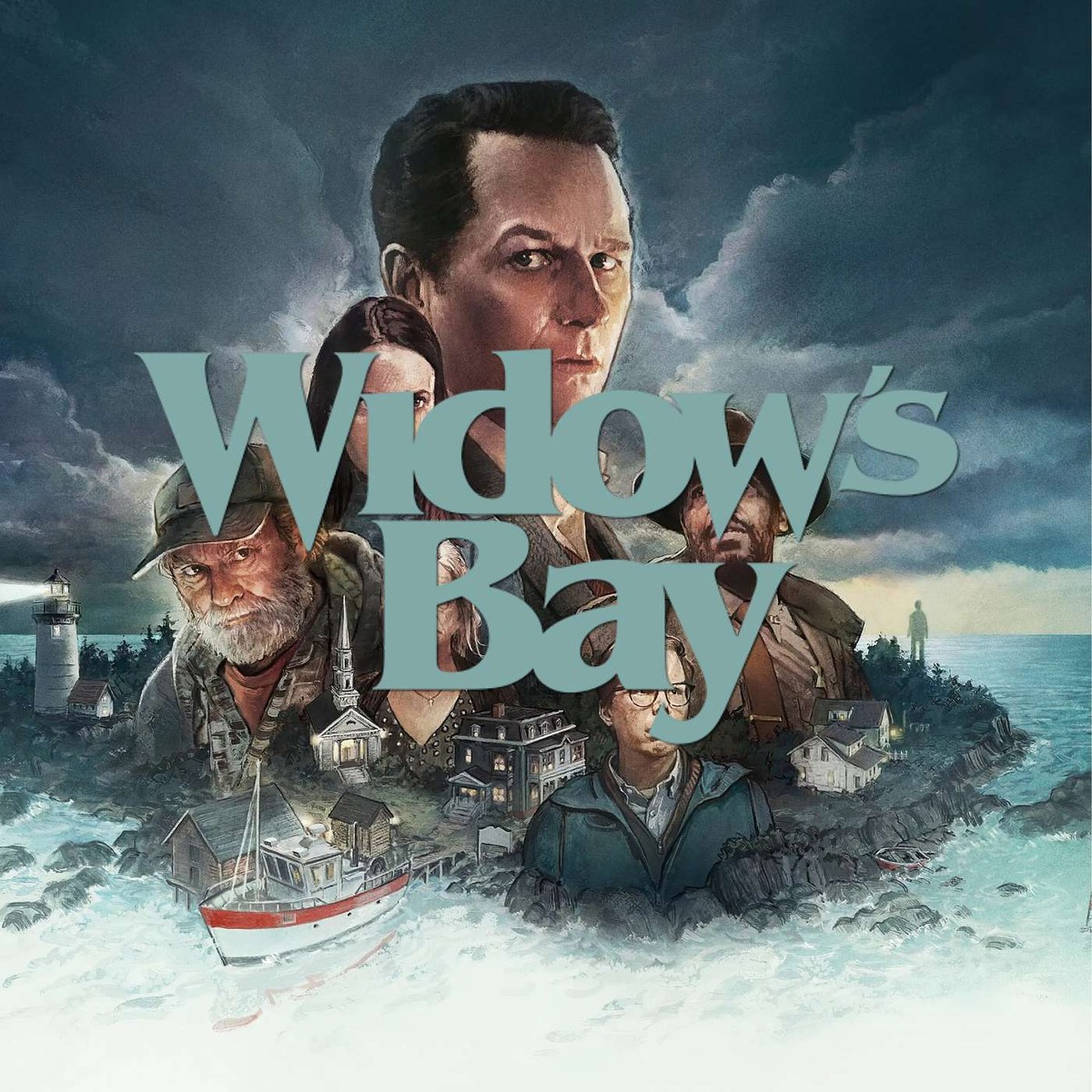
Widows Bay
Apple TV+'s cursed island mystery channels Stephen King, Lost and From, then delivers a quiet, devastating reveal that reshapes the entire season. Full spoiler discussion.
 8.6/10 · EXCELLENT
 A quick heads up before we go any further. This review is a full spoiler discussion, so if you haven’t watched the season yet and you want to go in completely fresh, maybe bookmark this one and come back when you’re done.
Before we even get into Widow’s Bay itself, I want to spend a minute talking about Apple TV+ because honestly, what they’re doing right now is pretty remarkable. There was a period where HBO was the undisputed king of television. If HBO released a new show, you were watching it. They built that reputation over decades and quality was almost guaranteed. But over the last few years I’ve found myself saying something I genuinely never expected to say. Apple TV+ is starting to feel like the new HBO. Now obviously different shows appeal to different people, but when I look at what I’ve personally been watching lately, the lineup is genuinely impressive. Foundation has been brilliant. Sugar completely surprised me. Ted Lasso was fantastic. Shrinking continues to be one of the most enjoyable things on television. Criminal Record was outstanding. For All Mankind remains one of my favourite science fiction shows ever made, and now we’ve got Star City carrying that universe forward. The point is, Apple have built a level of trust with me where when something new arrives, I’m already interested before I’ve seen a single frame.
That’s exactly where I was with Widow’s Bay.
The trailer grabbed me immediately, not because it looked like something I’d already seen, but because it reminded me of the kinds of stories I grew up loving. There was something very Stephen King about it. That small town atmosphere where everybody seems to know something except the audience. The feeling that this location has been carrying a secret for a very long time and that secret is slowly rotting everything around it. As I started watching, I kept picking up little influences almost everywhere I looked. There are moments that reminded me of Jaws, particularly around the water and the bay itself. You can feel Lost hidden throughout the season if you’re paying attention. Fans of From are probably going to find a lot to enjoy here as well. Yet somehow, despite all of those touchstones, the show never feels like a copy of any of them. It takes those ingredients and creates something that genuinely feels like its own thing.
An Island That Won’t Let Go
One of the smartest decisions the show makes is turning the island itself into a character. We’ve seen isolated island stories before, but Widow’s Bay approaches it from a slightly different angle. At first you assume the isolation is purely geographical. It’s an island surrounded by water and that’s the limitation. But then the show starts revealing its secrets, and as the mythology expands, we learn that many of the people living here physically can’t leave. They weren’t simply born on the island. They’re trapped by it. Suddenly the water isn’t freedom anymore. It’s a prison wall. That single revelation completely changed how I was viewing everything. Every conversation started carrying more weight. Every argument made more sense. Every character became a little more tragic because now you understood that many of them weren’t staying because they wanted to. They were staying because they had no choice.
That’s where Matthew Rhys’ character Tom Loftis becomes so important to the whole thing. Tom is probably the most relatable character in the series because he’s experiencing the island exactly the way we are. Everybody around him seems to know the rules. Everybody around him understands the history. Everybody around him knows what’s coming. Tom doesn’t, and because of that, we get to discover everything through his eyes. What I really loved about the way he’s written is that he’s not your typical arrogant sceptic who refuses to believe anything. He’s genuinely trying to do the right thing. He wants to improve the town. He wants to help the people around him. He wants to be a good mayor. The problem is he keeps trying to solve supernatural problems using common sense, and meanwhile Stephen Root’s character Wyck is practically screaming at him for half the season trying to explain what’s actually happening. Stephen Root is one of those actors who instantly improves whatever he’s in, and that’s absolutely the case here. Every scene he appears in feels important because he’s carrying the entire weight of the island’s history on his shoulders.
When Horror Learns to Laugh
As the season progresses and the show starts experimenting with different styles of storytelling, that’s where it really won me over. Take the haunted inn episode. This is one of the first moments where I realised the writers understood exactly what kind of show they were making. The setup immediately reminded me of The Shining. You’ve got this supposedly haunted location, strange things happening around Tom, and an atmosphere that feels genuinely unsettling even when nothing is technically occurring. The genius is that the show never lets itself become too heavy. Just when things are getting properly creepy, Widow’s Bay finds a way to make you laugh, and nowhere is that more obvious than the Sea Hag episode.
Honestly, that might have been my favourite episode of the entire season. The premise is fantastic. Tom learns he’s essentially been marked by this supernatural entity and now she’s coming for him. No matter where he goes. No matter what he does. She’s hunting him. The tension builds beautifully throughout, constantly teasing the confrontation, constantly delaying it, and then when she finally enters his house and Tom is completely frozen and everything has been building to this exact moment, he accidentally launches her across the room with the chair. I absolutely lost it. It’s one of those moments that sounds completely ridiculous when you try to explain it to somebody but works perfectly within the context of the episode. Horror and comedy usually work against each other, but here they’re pulling in exactly the same direction, and the laugh actually makes the whole scene more memorable rather than undercutting it.
As the mythology deepens, every episode starts revealing a new layer of the island’s history, and every new answer creates even more questions. I loved that the show never became repetitive about it. Each episode felt like it was exploring a different corner of the curse, a different piece of folklore, a different consequence of whatever happened all those years ago. The witchcraft episode was another standout for me. There’s something genuinely disturbing about watching a character construct a completely different reality around herself, truly believing she’s hosting this beautiful gathering, truly believing she’s created something wonderful, while everyone watching can see that something is horribly wrong. The way the sheriff slowly starts seeing through the illusion was brilliantly handled, and what could have been a fairly straightforward supernatural episode ends up being one of the most memorable chapters of the season.
Then we move into the shelter storyline, and this is where the show really starts tightening the screws. Up until this point the series has been exploring isolation. Now it’s exploring confinement, and there’s a massive difference. Being trapped on an island is one thing. Being trapped underground with a group of frightened people while a storm closes in is something else entirely. These episodes gave me the strongest Lost vibes of the whole season, particularly when we start discovering those old instructional videos. I absolutely loved this stuff. There’s something inherently fascinating about finding recordings from previous generations trying to explain the rules of a mystery. Every tape feels important. Every tape contains information that could save lives. And every tape somehow creates even more questions than it answers. One detail from those recordings becomes quietly crucial later on. The tapes explain the bell tower, and more specifically, they explain that every chime represents the number of sacrifices required by the island. At the time it’s just another fascinating piece of lore, one of dozens of strange rules that seem to govern Widow’s Bay. But like all great mysteries, the show is planting seeds long before you realise why they matter.
The Reveal That Changes Everything
As we move into the final stretch of episodes, everything starts clicking into place. The island’s history becomes clearer. The curse becomes clearer. The bloodlines become clearer. And eventually we arrive at what I think is the best reveal of the entire season, centred on the old woman everyone believes is the final surviving descendant, the woman Tom thinks he may need to eliminate in order to save the island. That entire sequence is brilliant, and what makes it brilliant isn’t action or effects. It’s conversation. The two characters simply sit together and talk. Yet it becomes one of the most tense scenes of the season because every piece of information she reveals changes the picture completely. As she starts tracing her family history, you can feel the puzzle locking together, and then the key detail lands. The daughter she gave away. The daughter nobody knew existed. The daughter who grew up somewhere else entirely. And it hits you at exactly the same moment it hits Tom. The daughter is his wife. Which means the bloodline didn’t end. Which means the curse didn’t end. Which means the final descendant isn’t the old woman sitting across from him. It’s his son. My stomach genuinely dropped. Because suddenly the entire show changes shape. This isn’t about solving a mystery anymore. This isn’t about defeating a monster. It’s about a father being forced to consider the unthinkable. Matthew Rhys is extraordinary during these final episodes, carrying that emotional weight in a way that feels completely real, and at the same time you’ve got the sheriff desperately trying to get his pregnant wife off the island before their child is born, because he refuses to let another generation be trapped by this. The stakes become personal for everyone, not just Tom, and that’s what makes the finale hit as hard as it does.
When the immediate threat appears to be over and the season feels like it might be moving toward some kind of resolution, the show circles all the way back to those instructional videos. The bell. The chimes. The sacrifices. Tom stands looking out across the island, and then he hears it. The bell begins to ring. And immediately everything comes flooding back. Every chime matters. Every chime means something. Every chime is changing what comes next. It’s one of those endings that doesn’t rely on shock value at all. Instead it rewards you for paying attention. The season has been telling you the answer the whole time. You just didn’t realise it.
Final thoughts. Widow’s Bay is exactly the kind of television I love discovering. It’s confident and atmospheric and it knows when to be funny and when to be genuinely unsettling. Most importantly, it trusts its audience. It doesn’t rush the mystery. It doesn’t hand you the answers. It lets the story unfold at its own pace and it rewards the people who stick with it. Apple TV+ continues to build one of the strongest television libraries going around, and Widow’s Bay absolutely deserves a place alongside some of their very best work. If you’re a fan of Stephen King, or Lost, or From, or just great mystery storytelling with a supernatural edge, this one should be near the top of your watchlist.
Listen to this episode
Follow Frame 70 on your favourite podcast app and new episodes find you the moment they drop.