I Swear
The true story of John Davidson, the man who taught the UK to understand Tourette syndrome, told with heartbreak, humour and one of the most moving performances I've seen this year.
 8.5/10 · EXCELLENT
 Going into I Swear, I knew very little about it. I knew it was a British film, and that was enough to get my attention. British dramas tend to feel grounded, character-driven, and when they’re based on true stories, they rarely go for the Hollywood version of events. What I also realised before sitting down was that I knew surprisingly little about Tourette syndrome itself. I understood the basics, but beyond that I couldn’t honestly say I’d ever knowingly met someone living with the condition. By the time the credits rolled, I’d learnt far more than I expected, not because the film lectures you, but because it puts you directly inside someone else’s life.
I Swear tells the true story of John Davidson, diagnosed with Tourette syndrome at 15, who went on to become one of the UK’s biggest advocates for awareness and education surrounding the condition. It’s a story about misunderstanding, acceptance, resilience and finding purpose through adversity. The film opens near the end of John’s journey. He’s waiting to receive his MBE from Queen Elizabeth II. He’s nervous. And almost immediately you’re reminded that Tourette’s doesn’t disappear because you’re standing inside Buckingham Palace. Without giving too much away, what happens in that opening scene had the entire cinema reacting. Some people laughed, some gasped, and I think that’s exactly the point.
The film asks you a question early on that stayed with me the whole way through. Is it okay to laugh? Not at John, but at the situations his Tourette’s creates. There are moments that are flat-out funny, yet you know they come from something completely outside his control. The movie handles that balance really well.
A Kid Whose Own Body Works Against Him
From there we jump to the early 1980s, and the soundtrack kicks in with New Order’s Blue Monday. I love that. Movies that know how to use music to drop you straight into an era, and this one nails it. But the tone shifts quickly. We meet John as a teenager, before anyone understands what’s happening to him. His tics start appearing in the worst possible place: a classroom, surrounded by other teenagers. Watching Scott Ellis Watson in those early years is heartbreaking. This is his screen debut, and it’s a remarkably mature performance. He never feels like he’s acting out symptoms. He captures the confusion, the embarrassment and the fear of a kid whose own body is suddenly working against him.
What hit me hardest wasn’t the Tourette’s. It was everybody else’s reaction to it. Teachers don’t understand, classmates bully him, and his own family mistakes his outbursts for bad behaviour rather than recognising that something neurological is happening. And historically, that’s accurate. Tourette syndrome had started to be recognised medically by the early 1980s, but public awareness was almost non-existent. Most people didn’t know what they were looking at. That makes those early scenes even harder to watch. You’re seeing a teenager punished for something he can’t control.
One sequence really stayed with me. John walks into a river. At first I didn’t know what I was watching. Was he trying to escape? Looking for peace? Or was this something darker? The film doesn’t rush it. It lets you sit with it. When John later finds himself in hospital, confronting how desperate things have become, it lands as one of the emotional turning points of the story. Tourette’s isn’t just about involuntary movements or shouting words. It’s about living in a world that constantly misunderstands you.
Robert Aramayo Disappears Into the Role
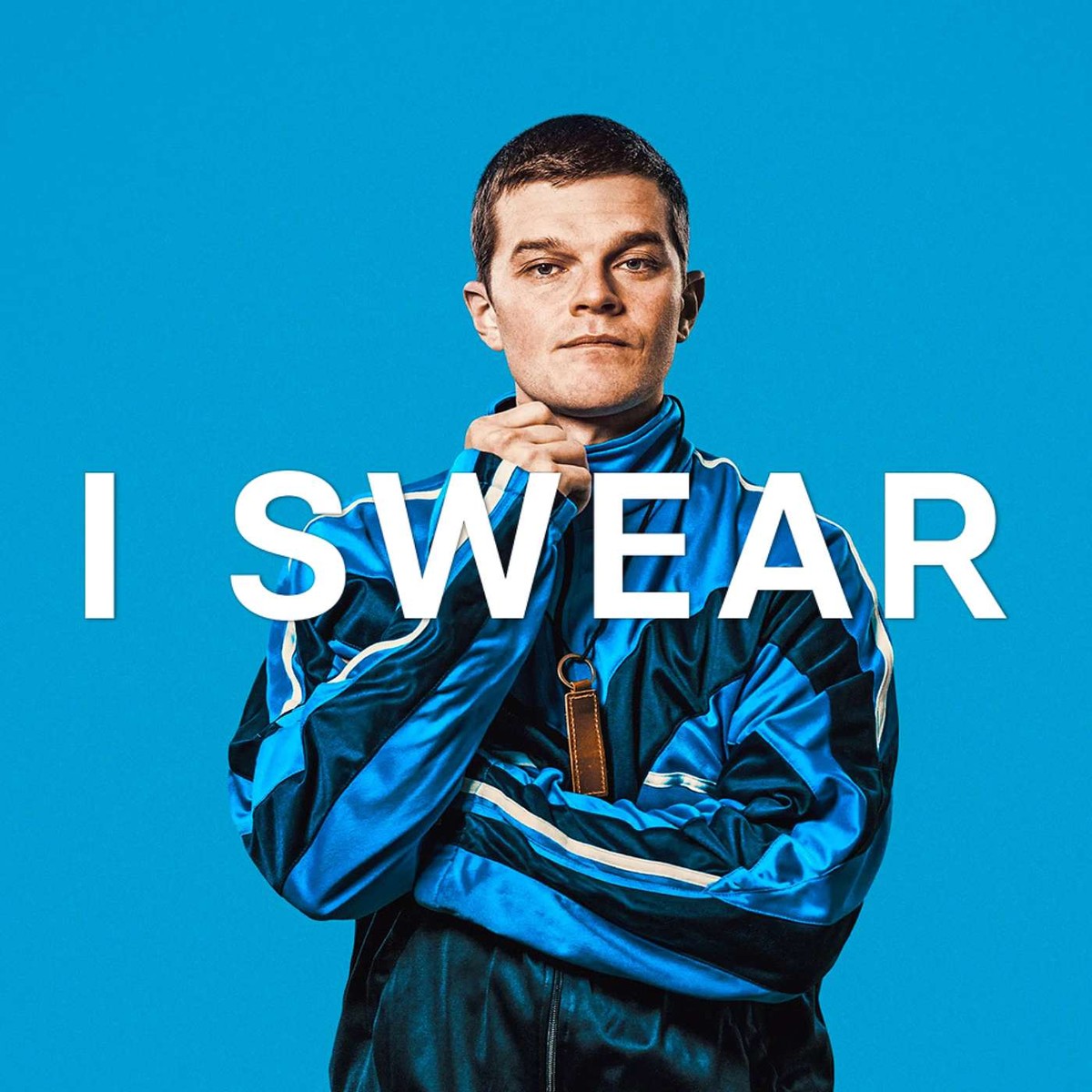
After a time jump, we meet John as an adult, now played by Robert Aramayo. I know Robert from The Lord of the Rings: The Rings of Power, where he plays Elrond, and before that as young Ned Stark in Game of Thrones. Both excellent performances. This one is something else entirely. He disappears into John completely. There’s not a single moment where you feel like you’re watching an actor. You’re just watching John Davidson live his life. The preparation behind this performance is remarkable: the physical tics, the vocal outbursts, the emotional exhaustion underneath all of it. He’s clearly done the work.
What I found fascinating is that even as an adult, John spends more time worrying about making other people comfortable than he does worrying about himself. He’s constantly apologising, constantly explaining, constantly trying to make everyone else feel okay. That hit me harder than any of the actual tics. You realise how much emotional energy he spends protecting other people from his own condition, and that’s incredibly sad.
As John’s life continues, something interesting starts to happen. The film stops showing us what Tourette syndrome is, and starts showing us who John is. That’s an important distinction. Tourette’s is part of his life, but it’s not his identity. A big part of why that works is the people coming into John’s world. Peter Mullan plays Tommy, the caretaker who becomes far more than just a colleague. I’ve always loved Peter Mullan’s work, and audiences will know him recently as King Durin III in The Lord of the Rings: The Rings of Power. Here, he brings real warmth and honesty to Tommy. He’s the kind of mentor you hope to meet at some point in life, someone who doesn’t see John as needing to be fixed, but simply as someone worth believing in. One conversation really stuck with me. Tommy tells John that Tourette’s isn’t the biggest problem. The biggest problem is that people don’t understand it. That’s the turning point of the whole movie. Instead of hiding from the world, John slowly starts to realise the answer might be helping the world understand him.
Not Knowing Whether to Laugh or Cry
There were plenty of moments throughout the film where I honestly didn’t know whether to laugh or cry, and I mean that as a compliment. Some of John’s outbursts are completely unexpected, sometimes flat-out funny, other times deeply uncomfortable. There’s a nightclub scene where an involuntary movement knocks a drink from someone’s hand and suddenly he’s in a fight through no fault of his own. You spend the whole film on edge because you never know what situation John’s about to find himself in, not from anything he’s chosen, just from his body making the decision for him. That’s brilliant filmmaking. You start feeling the same anxiety he does.
The film doesn’t shy away from the darker side of that reality either. There’s a brutal scene where John is assaulted and left badly beaten under a bridge. It’s hard to watch, not because it’s graphic, but because by that point you care so much about him. It’s a reminder of how vulnerable people living with misunderstood conditions can be when they’re surrounded by ignorance instead of compassion. But the film never lets itself become hopeless. Every dark moment is balanced by a reminder of how much kindness can change a life.
In the film’s later stretch, things move to a really uplifting place. John starts organising weekends for kids living with Tourette syndrome, educating parents, speaking at schools, to police officers, medical staff and community groups. Instead of hiding from the condition, he’s helping others understand it. And many of the people appearing in those later scenes actually live with Tourette syndrome themselves. It gives that part of the film an authenticity you couldn’t fake.
Then comes one final scene that quietly stayed with me. John visits a research facility and gets the chance to trial a new treatment. For a few precious minutes, the tics stop. He walks. He talks with people. He wanders through a library. Then he realises five minutes have gone by. Five minutes without a single tic. The film doesn’t turn it into a big moment. It’s just peaceful. And somehow that makes it more emotional.
The closing credits roll with real photographs and home video footage of the real John Davidson throughout his life. Seeing the actual man after two hours of watching actors bring his story to life adds one final layer. This wasn’t just a touching screenplay. Someone actually lived through everything you’ve just watched. And thanks to him, countless families now understand Tourette syndrome a little better.
Listen to this episode
Follow Frame 70 on your favourite podcast app and new episodes find you the moment they drop.