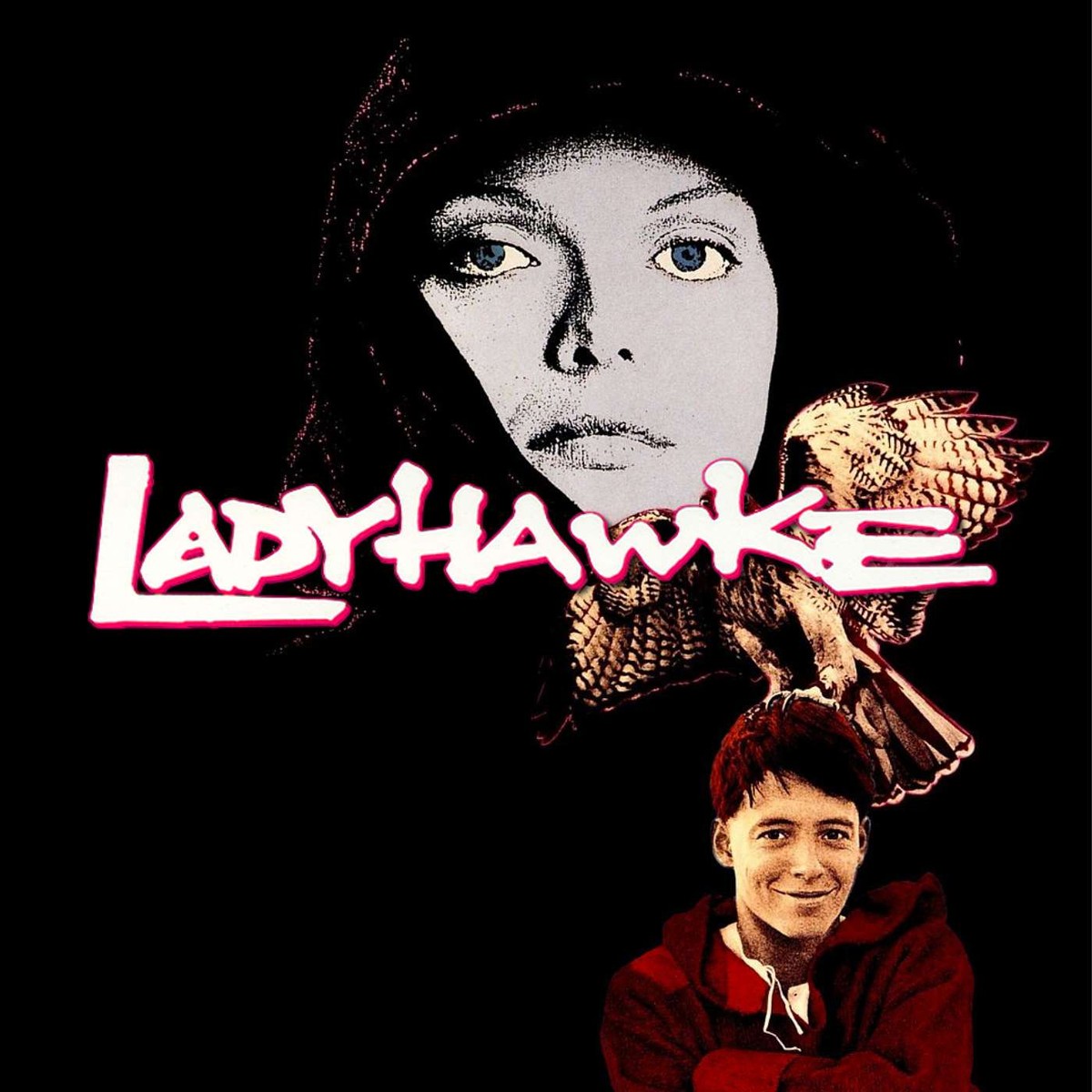
LadyHawke
Richard Donner trades superheroes and shootouts for a cursed medieval romance, and Hauer and Pfeiffer make you believe in a love story where the lovers barely share a single scene.
 7.6/10 · RECOMMENDED
 Richard Donner is a name most people already know from somewhere else entirely. By 1985 he’d already given us Superman and The Omen, and a couple of years after Ladyhawke he’d go on to kick off the Lethal Weapon films. Horror, superhero spectacle, buddy-cop action: the man simply doesn’t stay in one lane. So watching him turn his hand to a full-blown romantic fantasy here was one of the things I was most curious about going in. This was the era of Excalibur and Conan and Dragonslayer, when fantasy was riding about as high as it had ever ridden, and Ladyhawke came at it from a completely different angle. Less swords and sandals, more heartbreak.
A World You Can Actually Touch
The first thing that struck me was how the film looks. This is shot in real Italian locations, proper castles, proper landscapes, and honestly that decision alone does half the work. There’s a texture to it that a studio backlot just can’t fake. You believe you’re in this world because you’re actually looking at it, and that gives the whole film a kind of timeless quality that a lot of eighties fantasy simply doesn’t have anymore.
And you need that grounding, because the premise here is a heartbreaker. Navarre and Isabeau are cursed by the Bishop of Aquila so that they can never truly be together. By night, Navarre becomes a wolf while Isabeau returns to her human form. By day, it reverses, and Isabeau becomes a hawk while Navarre is a man. They’re not spared the memory of it either, which is the cruel part. They know exactly what’s happening to them and to each other, and the only moment they ever get to be together in human form is that fleeting sliver of dawn and dusk when day and night trade places. It’s a beautifully cruel piece of mythology, and the film leans into it rather than softening it.
A Romance With Almost No Scenes Together
What sells that tragedy is Hauer and Pfeiffer. The two of them share almost no screen time together as two people, and yet the romance still lands. That’s a testament to both performances. Hauer plays Navarre with this quiet, controlled sorrow underneath the swagger, and Pfeiffer gives Isabeau a stillness that says more than dialogue could. You come away believing these two are devoted to each other, and they barely get to stand in the same room as themselves.
Then there’s Matthew Broderick as Philippe Gaston, and he’s doing something quite clever here. He’s not just the comic relief. He’s the audience’s way into this world. Everything the other characters already understand about the curse and the tragedy, Philippe is discovering right alongside us, and his humour gives the film somewhere to breathe. It could have been a clash, a wisecracking thief dropped into this melancholy fairy tale, but it works because he’s our entry point rather than a distraction from it.
That Famously Divisive Score
Now, the score. Andrew Powell’s music for this film is famously divisive, all synths and orchestra pushed up against each other, and I know plenty of people who find it dates the film badly. I went in ready to have an opinion on that one way or the other, and instead I found myself completely won over, particularly by one piece called “She Was Sad at First.” It’s the cue that carries Isabeau’s theme through to its fullest, weaving against Navarre’s, and it does more emotional heavy lifting than almost any line of dialogue in the film. Rather than distracting me, it became one of the things I remember most.
There’s real craft in how patiently the film builds toward its resolution too. Imperius, a disgraced monk who once served the Bishop, ends up tangled in the lovers’ fate almost by accident, through nothing more than a confession he never meant to be dangerous. I won’t go further than that, because how it all resolves is worth discovering for yourself rather than hearing secondhand from me.
Listen to this episode
Follow Frame 70 on your favourite podcast app and new episodes find you the moment they drop.