Les Misérables
Sung raw on camera and fearless in every scene, Tom Hooper's Les Misérables broke me in the cinema in 2012. More than a decade later, it did it all over again.

Before we get into the film itself, a little bit of context, because this one arrives with more history behind it than almost anything else you could put on screen. Les Misérables started life as Victor Hugo’s enormous novel, published all the way back in 1862. From there it became the sung-through stage musical that opened in London in the ’80s and simply never went away, one of the most popular and highest-grossing stage musicals of all time, running for decades and touring the world. So when Tom Hooper, fresh off his Best Picture win for The King’s Speech, announced he was bringing it to the big screen with a cast this stacked, expectations were enormous. Hugh Jackman as Jean Valjean. Russell Crowe as Javert. Anne Hathaway as Fantine. Amanda Seyfried, Eddie Redmayne, Samantha Barks, and Helena Bonham Carter and Sacha Baron Cohen as the Thénardiers. That is a serious lineup for a musical, and musicals on film are notoriously difficult to get right.
I should say up front, I have a personal history with this one. I first saw it in the cinema when it was released, and it moved me in a way no film ever had before. I’ve seen a lot of musicals over the years, and I’ve been in a fair few myself, so sitting down to watch it again for this review, I honestly wasn’t sure how I’d feel. Would it still hit the same way, or had that first viewing been a one-off, something about the big screen and the moment? I can tell you now: it hit exactly the same way. Maybe harder.
Singing in the Moment
Let’s start with that opening, because the opening scene of this movie is absolutely incredible. You’re dropped straight into a dry dock, with prisoners hauling a massive ship in by rope, waves crashing over them, rain hammering down, and there’s Valjean among them, 19 years into a sentence for stealing a loaf of bread to feed his sister’s starving child. The scale of it is staggering, and it tells you everything about the world of this story in about two minutes flat. This is a film about people crushed under the weight of an unforgiving system, and Hooper opens by literally showing you men straining against something impossibly heavy. As statements of intent go, it’s one of the best openings I can remember.
And then there’s the thing this film is probably most famous for, and the thing I still find quite amazing. The singing wasn’t recorded in a studio beforehand and mimed on set, which is how movie musicals have almost always been made. The actors sang every note in the moment, on camera, as the scenes were being filmed, with a pianist following their tempo through an earpiece. That decision changes everything. It means the performances aren’t polished vocal takes with acting laid on top; the singing is the acting. You hear voices crack because the emotion cracked them right there in the take. You hear breath, hesitation, rawness. Some people find that rough around the edges compared to a pristine cast recording, and fair enough, but for me it’s exactly why this film works. It trades perfection for truth.
The story itself, if you’ve somehow never crossed paths with it: Valjean is released on parole in 1815, and after a bishop shows him a tremendous, undeserved act of mercy, he breaks that parole, changes his name, and builds a new life as a factory owner and mayor. But Javert, the policeman who oversaw his release, spends the next two decades hunting him with a single-minded devotion to the letter of the law. Along the way Valjean crosses paths with Fantine, a worker from his own factory whose life collapses into poverty and prostitution, and he promises the dying woman he’ll rescue her little daughter Cosette from the innkeepers who’ve been treating the child as a servant while bleeding her mother for money. Years later, the story sweeps everyone into Paris and the doomed student uprising of 1832: the barricade, the young idealists, and a grown Cosette falling in love with the revolutionary Marius. I won’t go too deep into how it all resolves, because it’s much better discovered on screen, but it’s a story about mercy versus law, love versus obsession, and whether a man can ever truly outrun his past.
Performances That Leave a Crater
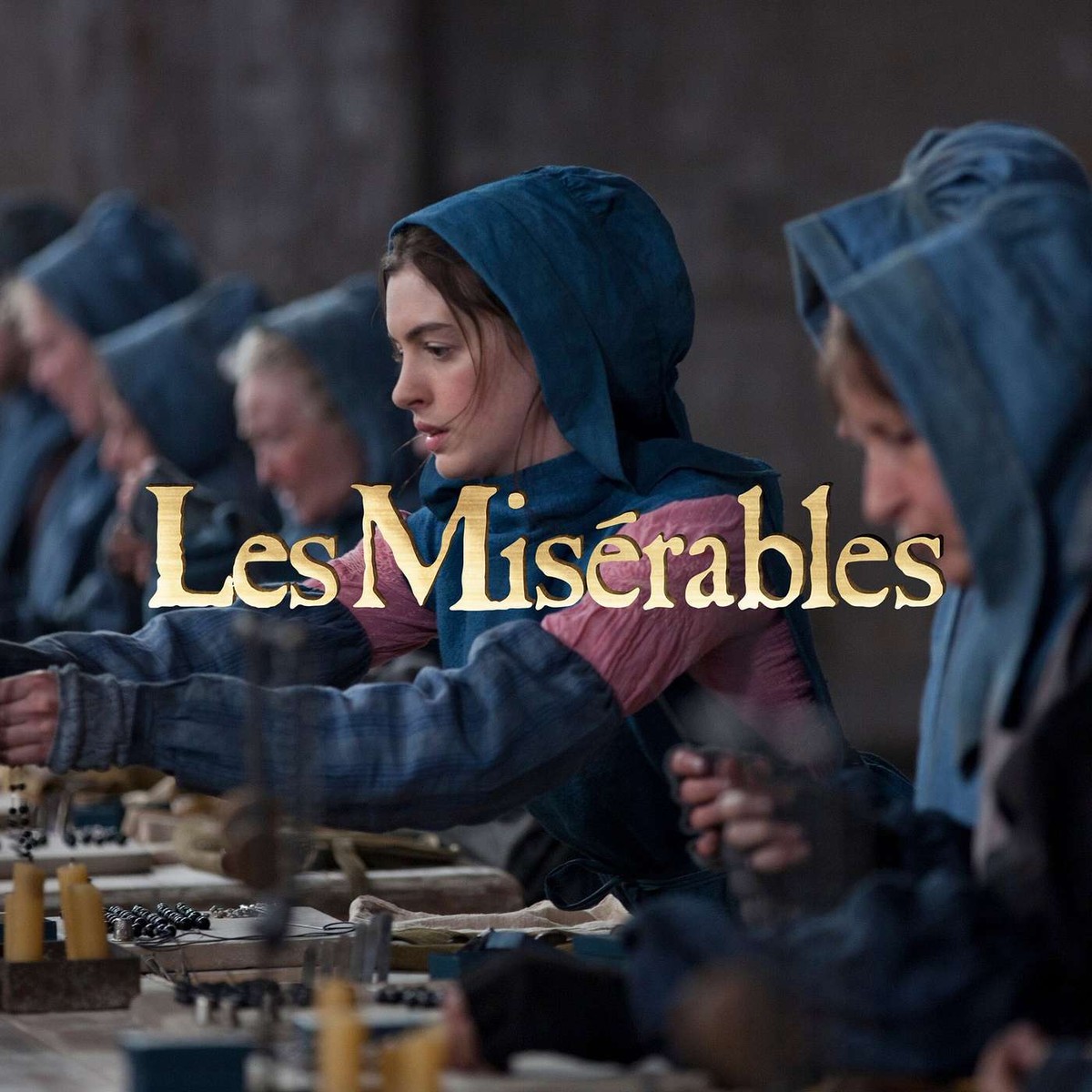
The acting in this movie is first class, right across the board. Hugh Jackman’s Valjean is, for my money, the performance of his career. We all know him as Wolverine, and if you’ve seen The Greatest Showman you know the man can carry a musical, but this is something else entirely. He ages across decades, he carries the physical transformation from broken convict to dignified mayor to weary old man, and his rendition of Bring Him Home, sung as a quiet prayer over a sleeping Marius at the barricade, is heartbreaking. Anne Hathaway won the Oscar for this, and she earned every inch of it. She’s on screen for maybe 20 minutes, and she leaves a crater. Her I Dreamed a Dream is done in essentially one unbroken take, the camera locked on her face, no cutaways, nowhere to hide, and she delivers the whole thing through sobs, with her hair shorn off for real during filming. It’s devastating. Fantine’s death was the first scene that got to me on this rewatch, just as it did in the cinema.
Now, Russell Crowe. His Javert divided people enormously when this came out, and plenty of viewers never warmed to his singing. I understand the criticism, but I don’t share it. His voice is rougher and more limited than the classically trained Javerts of the stage, sure, but the performance underneath it is brilliant. Javert isn’t a villain, he’s a man of absolute rigid certainty, and Crowe plays that rigidity beautifully. His version of Stars, sung alone on a rooftop above Paris, works precisely because it’s restrained. And when Valjean’s mercy finally shatters his worldview, when he simply cannot reconcile a criminal showing him grace, Crowe makes that collapse completely believable. This is the man who gave us Gladiator and A Beautiful Mind. He knows what he’s doing.
But I cannot forget the younger cast, because two of them nearly walk away with the film. Samantha Barks as Éponine is superb, and there’s a lovely bit of connective tissue here, because Barks had already played Éponine on stage in the West End and in the 25th anniversary concert before Hooper cast her in the film. It shows. Her On My Own, sung alone in the rain, is one of the finest moments in the whole picture, and the anguish of loving Marius while helping him find Cosette is played with real delicacy. And Eddie Redmayne as Marius: this was before The Theory of Everything won him his Oscar, and you can see the actor he was about to become. His Empty Chairs at Empty Tables, grieving his fallen friends among the candles, absolutely wrecked me. Even the comic relief lands. Helena Bonham Carter and Sacha Baron Cohen as the scheming Thénardiers give the film its only real laughs, and Master of the House arrives at exactly the moment you need to breathe.
A Story That Keeps Getting Retold
If you fall for this film, by the way, there’s a whole world to explore beyond it. The 25th anniversary concert at the O2 is a wonderful companion piece; Samantha Barks is in that too, alongside Alfie Boe as Valjean. There’s the 1998 non-musical film with Liam Neeson and Geoffrey Rush, which tells the same story straight. And the BBC did a terrific six-part series adaptation with Dominic West and David Oyelowo, again without the songs, which digs deeper into corners of Hugo’s novel the musical has to skip past. Few stories have been retold this many times, and there’s a reason for that: the bones of it are simply that strong.
So, final thoughts. Is it a perfect film? No. Some find Hooper’s love of extreme close-ups relentless, and if sung-through musicals aren’t your thing, where nearly every word is sung rather than spoken, this will be a big ask at 2h 38m. But those are quibbles against what this film achieves. It’s a huge, sincere, emotionally fearless piece of filmmaking that swings for the fences in every single scene and connects far more often than it misses.
Rated SEP 2026LISTEN TO THIS EPISODE
Follow Frame 70 on your favourite podcast app and new episodes find you the moment they drop.