Whalefall
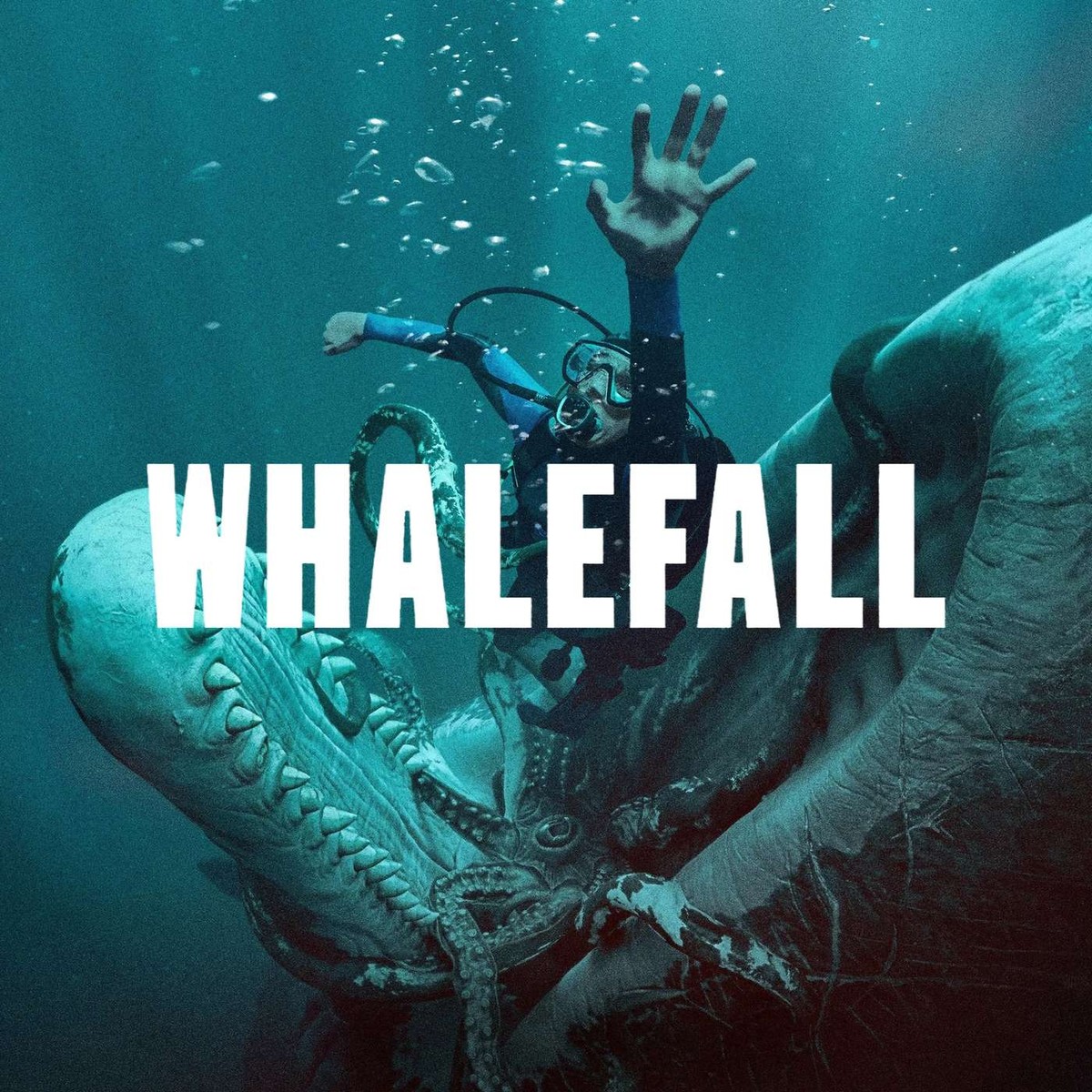
Swallowed whole by a 60-ton sperm whale with an hour of air left, Whalefall turns a survival nightmare into one of the year's best father and son stories.

Whalefall is adapted from Daniel Kraus’s 2023 novel, and if you know the book world at all, you’ll know that one made a serious splash. It’s a very, very popular book, and Kraus actually co-wrote the screenplay here with director Brian Duffield, which is always a good sign when you’re adapting something people love: the author is in the room. Duffield is a name worth knowing, by the way. He directed No One Will Save You, that near-silent home invasion movie with Kaitlyn Dever, and he wrote Underwater and Love and Monsters. So the man has form when it comes to putting characters in impossible survival situations and squeezing them. This one is a 20th Century Studios release, and it hit Australian cinemas on 15 October. I’ve been looking forward to it ever since the first trailer dropped a few months back, because the premise is an absolute hook: a grieving young man goes diving off the Central Coast of California to search for his father’s remains, and gets swallowed whole by an 80-foot, 60-ton sperm whale. With roughly an hour of oxygen in his tank. That air supply is the movie’s countdown clock, and the whole thing runs on it.
Austin Abrams plays Jay Gardiner, and I’m really enjoying this kid at the moment. He’s had a proper run lately, but as I said in my Resident Evil review, the poor boy. Someone needs to give him a romantic movie or a comedy, because he needs a break. The universe keeps throwing him into nightmares and he keeps being brilliant in them. Josh Brolin plays his father, Mitt, and the two of them actually shared the screen in Weapons, so there’s a nice bit of reunion energy there. Mitt is a gruff professional diver and whale-watching boat captain, hard-nosed and demanding, and the way he taught Jay to dive left a lot of scar tissue between them. Rounding out the family you’ve got Elisabeth Shue as Jay’s mum Zara, and Jane Levy and Emily Rudd as his sisters, and that is a quietly stacked supporting cast. Levy you’ll know from Don’t Breathe, Rudd from the Fear Street trilogy, and Shue needs no introduction at all.
Not the Movie I Expected
Going in, I didn’t know too much beyond the underlying premise. He gets swallowed by a whale, obviously. What I did not realise was how emotional this movie would be. It was pitched as The Martian meets 127 Hours, and look, the survival side is absolutely all there. But the heart of this thing is Jay and his dad. It is a very, very driven father and son movie wearing a creature-thriller costume, and I was not prepared for that. I’ll say up front that I won’t go too deep into certain details, because the way this movie unfolds means some of it is much better discovered on screen. But I’ll walk you through how it’s built.
The movie kicks off with the death of Jay’s father, which you see in the opening and in the trailer, so I’m not giving too much away there, and I won’t say why or how he dies. What matters is that their relationship was strained. So strained that Jay didn’t come to see his father when he was very ill, and that guilt is the engine of everything that follows. A while after Mitt’s death, Jay heads back to the family house, to his mum and sisters, and being back there is a trigger for him. He gets it in his head that he wants to right the wrong of not being there, to say the goodbye he never got to say. So very early one morning, he goes out scuba diving to look for his father’s remains. And that turns into a nightmare. He’s sitting on the edge of an underwater plateau when he starts hearing a sperm whale’s echolocation clicks, but he doesn’t see the whale at first. What he sees is a giant squid being chased by it, because sperm whales eat these things. Jay realises he is in exactly the wrong place, tries to get back to shore through a huge bed of seagrass and seaweed, and then the squid comes past him again, the whale passes right by him, and the turbulence throws him around like tumbleweed. The whale finally gets the squid in its mouth, right next to Jay, the squid latches onto him, and he gets pulled into all of that commotion. From there, the movie takes place with Jay trying to traverse the inside of this whale on about an hour of air. It is one of the most intense opening acts I’ve sat through this year.
Two Clocks Ticking
Now, one thing I was worried about going in was whether the movie would spend too much time inside the whale. An hour and a half in a stomach is a big ask. But just like the novel, the film splits its time between Jay’s real-time fight inside the whale and flashbacks to his relationship with his father, and that structure is the smartest thing about it. You get two layers of tension running at once: the physical clock ticking down, and the emotional wound slowly opening up. And here’s the clever part, which you don’t fully clock until later on. Those flashbacks aren’t just backstory. They’re lessons. Mitt teaching Jay how to dive, how to handle himself, how to survive. And Jay uses those lessons inside the whale. The movie is quietly handing him tools the whole way through, and watching them pay off is so satisfying. I won’t detail most of them, because they land much better on screen.
Inside the whale itself, the movie keeps finding new gears. When Jay first gets in there, he’s met by the squid, which is still very much alive, so he has to get through that before anything else. He ends up moving through parts of the whale that are not good environments for a human body, and I’ll leave the specifics for you to discover. But there’s also a really fun stretch in the middle that brings some proper humour, and honestly, it’s the perfect pressure valve for the emotional roller coaster around it. I’m going to give this one away because I loved it too much not to. It reminded me so much of Cast Away, Tom Hanks and Wilson the volleyball. In this one, Jay finds a luminous jellyfish, sticks it in a sock, and uses it as a torch while he’s trying to move into parts of the whale that are kinder to his body. And while he’s carrying it around, he’s talking to it. Asking it questions. Having a full back-and-forth with this glowing sock. It’s funny, it’s weirdly sweet, and it tells you everything about how alone this kid is. It’s lovely.
The movie also opens up beautifully in its back half. There are some amazing scenes with killer whales turning up, paired with a flashback where Mitt explains how orcas hunt sperm whales, and suddenly the thing that swallowed Jay isn’t just his prison, it’s prey. Then the whale, clearly aware something is wrong in its stomach, does a deep dive, and at that depth Jay’s body starts paying a very real price. By the end, you understand that Jay is in bad shape physically, emotionally, and probably psychologically. And that’s where the film plays its best card.
Because my Frame 70 Moment for Whalefall is what happens when Jay, exhausted and running on fumes, starts hallucinating that the whale is talking to him in his father’s voice. And they have a conversation. A proper one. It’s Jay’s chance to finally say goodbye to his dad, through this creature, and it’s where the title lands with its full weight. Mitt talks about whales, about how they move through life, and about what a whale fall actually is: when a whale dies and sinks to the ocean floor, its body becomes home to an entire community of deep-sea creatures. Death feeding life. A legacy that keeps giving long after the whale is gone. The second that clicked into place, the whole movie reframed itself for me, and I sat there thinking about my own old man. That’s the moment I carried out of the cinema.
See It Big
I also have to talk about how this thing looks, because this is a movie you need to see at the cinema. The cinematography is gorgeous. There are ocean scenes where you watch sperm whales just swimming through open water, and I have no idea how they pulled it off. It looks absolutely stunning. And then it flips, and the inside of the whale is suffocating in the best possible way. I didn’t expect it to be this visual, or this claustrophobic. Funny story, I was literally the only person in the cinema for my session, which honestly added to it. Just me, the dark, and a very big whale. If you enjoyed the deep-ocean dread of Underwater, or the one-man-against-the-clock desperation of 127 Hours, this sits proudly on that shelf, and there’s a bit of Pinocchio’s Monstro and the old Jonah story baked into its bones too. And if the movie grabs you, Kraus’s novel is sitting right there. I haven’t got to it yet myself, but it’s jumped straight up my list.
I’m not going to explain how Jay gets out of the whale, or that quite fitting scene at the very, very end of the movie. You deserve to meet both of those cold. But I’ll tell you the question I walked out with: I would love to know the distance this whale actually travelled with Jay inside it, because there’s a shot near the end where you see a lot more of the landscape, and it does not look anywhere near where his house was. Somebody do the maths on that journey, because it would be fascinating.
As always, that’s just how Whalefall landed for me. Entertainment is subjective, and a movie about grief hits everyone differently. What wrecked me in the belly of that whale might wash right over you, and that’s completely okay. For my money though, this is one of the big screen experiences of the year, and I’d love to hear how it lands for you.
Rated OCT 2026LISTEN TO THIS EPISODE
Follow Frame 70 on your favourite podcast app and new episodes find you the moment they drop.